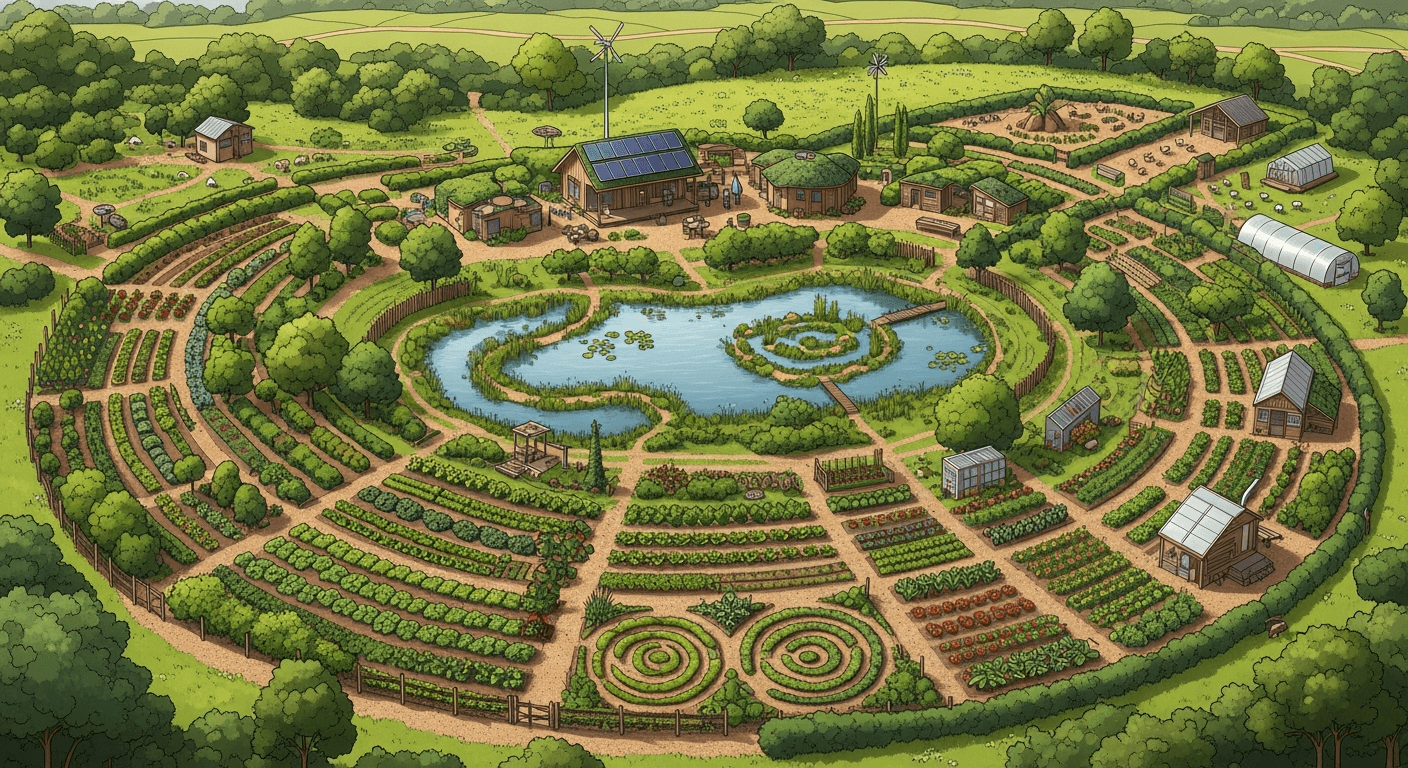

Your Guide to Effective Permaculture Farm Design Strategies
Introduction
Welcome to your guide on how to build a strong and healthy farm using permaculture design. This way of farming works with nature. It helps you set up systems for food production that last and give you a lot. If you follow permaculture principles, your farm can be full of life, strong, and need less of your time as you go on. No matter if you are new to the permaculture journey or you want to make your farm better, this guide gives you simple steps and support for all.
Foundations of Permaculture Farm Design

The main ideas of permaculture came from people like Bill Mollison. He said it is better to work with nature, not fight against it. These ideas use a set of design principles. They help you make systems that act like natural places. This way, everything works well and lasts for a long time.
Knowing permaculture principles is the first thing you should do if you want to have a farm that lasts and gives you good results. We will look at what permaculture is. We will talk about its main ideas and how it can help you in many ways.
What Is Permaculture and Why Does It Matter?
Permaculture is a way to plan farms and homes that last for a long time. Bill Mollison came up with this idea. The goal is to build systems that use nature as a guide. People study how the earth works and copy these patterns in their designs. Everything is set up so that things can go around in a cycle. Resources get reused, and waste stays low. This helps people live in a better and more lasting way.
More people are moving away from traditional farming that uses a lot of inputs. Food production now often uses permaculture instead. In permaculture, people do not depend on fossil fuels and synthetic fertilizers. They use renewable resources and natural methods to help the soil get better.
This way of doing things is getting more important as the world deals with problems in the environment. Permaculture design can help us all become more self-reliant, keep nature healthy, and make our groups stronger. It does this by using renewable energy and what is local.
Basic Principles for Farm Design Success
Success in permaculture begins with a few important design principles. The first thing you need to do is look closely at your whole site. You want to find out what is special about your land. Take time to watch where the sun, wind, and water go on your property. Do this before you dig or plant anything. Another big idea is to work with nature, not push against it. Try to bring things together in a way that helps them support each other, like they would in nature.
Applying permaculture principles means you need to take a few simple steps. Here are some things you can do when you start your design:
-
Look at the Yeoman's Scales of Permanence: This system helps you know which design ideas matter most. Start with the layout that does not change, like climate and good land shapes. Then, move to things that do not last as long, like different soil and new plantings. Using the Yeoman's scales of permanence or the scales of permanence can help you make smart choices.
-
Put Different Things Together: Make sure everything you choose does more than one job. A pond, for example, can give water for your garden or fields. It can also be a home for ducks and a spot to grow water plants.
-
Use Companion Planting: Put plants beside each other that help each other grow strong or keep away bugs. This is what companion planting does, and it works in a good way.
If you follow these ideas, you can build a farm that does well and lasts a long time. Your farm can do well in any type of weather. The main goal is to have a place that works well and can mostly take care of itself.
Key Benefits of a Well-Designed Permaculture Farm

A good permaculture design helps you use resources better. It works because these systems copy what you see in nature. Over time, this means there is less work for you to do. Good water management lets you use much less water for your garden. Rich soil also holds moisture longer, so you don't need to add as much water.
Diversity is another big benefit. Permaculture farms do not just grow one type of crop. They have a mix of perennial plants, yearly crops, and even animals. This mix helps the land stay strong against pests and sickness. It also helps with soil fertility and makes a rich soil where healthy plant growth can happen. Permaculture does this without using factory-made inputs.
In the end, a well-planned farm can make your life better. It lets you have good food you can trust, bring people in your area together, and helps you deal with changes in weather. You will not have to spend as much time doing hard and boring jobs. Instead, you get to enjoy what your land has to offer.
Planning Your Permaculture Farm Layout
Good permaculture design starts with careful planning. Before you put any seeds in the ground, you need to make a map of your farm layout. When you do this first, you can build a system that is efficient, productive, and that will last. This way, your land and you both benefit.
The design process starts when you look closely at the whole site. You will need to make maps and choose slow solutions that work best over time. If you think about things like the scales of permanence, you can make choices in the right order. In the next parts, you will see how to look at your land, use planning tools, and make a simple step-by-step design.
Step-by-Step Guide to the Design Process
The design process in permaculture takes time and care. You do not need to hurry. It is good to use slow solutions and watch what happens on the land. This way, you get to know what your land needs. You learn its patterns before you make any big changes.
Here is a simple, step-by-step way to help you begin with your schematic design:
-
Site Analysis: Take time to watch your land during each season. Make notes about where the sun shines, how the wind blows, how water flow happens, and what plants are already there.
-
Goal Setting: Think about what you want for your farm. Do you want it to give food for your family, be a business, or help your community?
-
Mapping: Draw a simple map of your land. Show main things like houses, hills, and where water comes in or goes out.
-
Zoning: Split your farm into zones. Put things you use often closer to where you always walk.
-
Sector Planning: Show on your map where outside things touch your land, like sun, wind, or places at risk of fire.
Remember that your design can always change. The last step is to keep watching and update your plans as needed. As your farm grows and you learn more, you can change your design. This will help it fit the land and your needs better over time.
How to Assess Your Land for Best Results
A good permaculture design needs you to really know your land. The first step is a soil test. A soil test helps you see what is in the soil, what the pH level is, and if it has nutrients. You have to pay close attention to the local climate. Watch the weather patterns in your area. You should know things like how much it rains, the hot and cold times, and when to expect frost. Look carefully at the land and its shape. The slopes and the way the land moves up or down are important for water management. Getting to know these things will help you build a strong plan for your land.
First, look at what lives on your land now. Try to find out which native species, including plants and animals, are there. This will show you what can grow or survive with little help in your area. It helps you pick plants that will fit well with your space and need less care to do well.
The best tool you can use is to look at things and notice details. If you can, spend a whole year watching your land in every season before you decide on the final design. Take this time to see how water moves when there is a lot of rain. Look for spots that get the most sun in winter, and find out where the wind is very strong. When you get to know your land this well, your design will be better and stronger.
Tools and Maps for Effective Site Planning
Having the right tools and maps helps make site planning easier and more effective. For a big picture, you can use digital tools like google earth and google maps. They work well to make a base map that shows property lines, top shapes of the land, and what buildings are there now. For more careful work on the ground, you only need a clipboard, graph paper, and a tape to measure. These tools are simple, but they help a lot.
Making a set of overlay maps is a great way to show different things in your schematic design. You can make one map for water, another for access, another for zones, and one for sectors. By layering these, you can see how the parts fit together. For example, a water map can point out the flow of water and some spots where you could put rain barrels or swales.
These maps help you see how your design will work. They let you plan the best ways to move around, place things to catch and save energy, and make sure every part of your design works well together.
Tool/Map Type Use in Permaculture Planning Google Earth/Maps Create initial base maps, view topography and property boundaries. Topographic Map Understand the slope and contour of your land to plan water flow. Sector Map Identify and plan for external energies like sun, wind, and fire risk. Zone Map Organize your design based on frequency of use and access needs. Water Map Visualize rainwater runoff, drainage patterns, and irrigation systems.
Key Elements of a Productive Permaculture Farm
A good permaculture farm works because it uses a well-thought-out design system. The key parts of the farm include how it is laid out in zones, how the sectors are placed, and how water management works. It also relies on well-planned buildings and has different kinds of plants, like a food forest. All these things come together so the farm can be a good place for people and plants.
When these elements work well together, they help make a strong and full ecosystem. If you place and use each part in the right way, you get more out of them and need to do less work to keep them going. Let's see how we can design these elements to make everything work better.
Designing Zones and Sectors for Efficiency
The idea of zones is key in good permaculture design. You set up your outdoor space by making parts, or zones, that depend on how often you need to go to them. Zone 0 is your home. Zone 1 is right outside your house. Each zone then moves out further, with less often-used spots in the far zones. This way, you save time and energy. If you have a kitchen garden or other things needing a lot of care, put them close to your house.
Zones let you divide your outdoor spaces by the things people do in them. But sectors help you think about the way nature moves across your land. Sectors show how sun, wind, and water flow from one area to another.
-
Sun Sector: This shows where the sun goes in the sky. It will help you know where to put sun-loving plants. You can also use it to decide the best spot for solar panels.
-
Wind Sector: This tells you where the main winds come from. It helps you find the right place to put windbreaks.
-
Water Sector: This maps out how water moves in your area. It is important for making irrigation and drainage plans.
When you put your zone map over your sector map, you can make better choices for your permaculture design. For example, you can put your kitchen garden in Zone 1. At the same time, you make sure it gets sun but is safe from strong wind. Putting these maps together is what makes a permaculture design work so well.
Water Management and Irrigation Strategies
Good water management is important if you want a strong farm, especially during dry summers. A permaculture approach uses the idea of "slow, spread, and sink" water. This is to help you use every drop well. Rainwater harvesting is a main way to do this. Here, you collect the water that runs off from your roofs and keep it in rain barrels or tanks for use later.
You can use a few ways to control the flow of water on your land. These steps help keep the ground wet and add more water into the soil.
-
Swales: Swales are ditches made on a slope. They catch rain. The water stays there and has time to soak into the ground.
-
Drip Irrigation: This is a good way to water plants. Water goes right to the roots. This way, not much water gets lost from the soil into the air.
-
Mulching: A thick layer of mulch covers the ground. It helps the soil stay damp for longer. You don't have to water as much when you use mulch.
In places where there is much water, it is important to control how water drains away. Raised beds can help stop water from sitting in the ground for too long. Putting ponds in the right spot can also help handle extra water. The main thing is to make a system that works well for your weather and your land. That way, you can get the most out of this important resource.
Integrating Buildings, Paths, and Access Points
A good permaculture farm puts buildings, paths, and ways to get around in smart places on the land. This is not just for comfort. It is to get the best use of work and supplies. If you put your home, sheds, and greenhouses in smart spots, they help each other and use less energy. For example, when you put a greenhouse on the south side of a building, it can use the sun's warmth.
Good pathway design helps cut down work and boost how much you get done. Main paths need to be wide and straight. They should fit wheelbarrows and other tools. The paths should join the places you use most often. If you follow the land's natural shape, it will help stop soil erosion. It will also make it easier for people to get around.
The way you place the access points should follow your schematic design and the design principles. You want to make paths that feel natural. This will help with your daily chores. If you think about your paths and structures before you start, your farm can be easy to work in and feel good to walk around. It can also be more productive.
Growing Systems for Permaculture Farms
Permaculture uses many ways to grow plants that work well together. This helps make a strong and healthy farm. Instead of using just one method, you can have an annual vegetable garden. You can also add a food forest with several layers. This can include fruit trees and perennial plants. Combining these will help your farm do better over time.
These systems help you keep food production going all the time. They also help keep nature in balance. By using companion planting and stacking, you get the most out of your garden. These ways let you grow more food and still make the land better. Let's look at some important ways to grow food and find out how to pick the right crops for them.
Selecting Crops for Sustainability and Yield
Choosing the right crops is key for your permaculture farm to do well. The best plants are the ones that grow in your local climate and soil. Start by learning about native species and other plants that grow well where you live. This can help you save time, water, and work over the years.
A mix of perennial and annual plants will give you steady growth that lasts for years. It will also add new looks each season.
-
Perennial plants: You may want to grow fruit trees, nut trees, berry plants, and vegetables like asparagus or rhubarb. These plants grow strong roots in the ground. They will give you food for many years and don't need a lot of work.
-
Annuals: You can fill your vegetable garden with different types of annuals each season. Pick heirloom and open-pollinated seeds, so you can save seeds for the next year.
To keep the soil healthy and get good crops, you need to practice things like crop rotation in your vegetable garden. Do not plant the same kind of vegetable in the same area every year. Change their spot each time to stop pests from building up and to help the soil keep its nutrients. If you do this, your vegetable garden will give you a lot of crops during the growing season.
Incorporating Trees, Perennials, and Guilds
One big part of permaculture is building polycultures, also called plant guilds. These are groups of plants that help each other grow. A food forest is the best way to see this idea. It looks like a natural forest with many layers. A food forest mixes things like fruit trees, nut trees, bushes, herbs, and ground covers. This is done to use space in the best way and make a strong system that keeps going on its own.
A guild is built around something in the middle, often a fruit tree. Around this tree, you find other plants that each do a job. Some bring nitrogen into the dirt. Some bring good bugs, and some keep away bugs that cause trouble. By putting perennial plants and other helpful plants together like this, you get a set-up that mostly takes care of itself.
A good example is an apple tree guild. In this setup, people often use comfrey to pull nutrients up to the top soil. They add chives to keep away bugs. Clover is included as a ground cover to add nitrogen to the soil. This way, companion planting helps build a garden that is strong, full of life, and makes more food.
Best Practices for Animal Integration
Animals are an important part of any good permaculture system. They help with pest control, soil fertility, and food production. Chickens can be used to scratch up the garden beds and also make the soil better by adding their waste between plantings. Ducks are great for pest control because they eat slugs. By having animals in your system like this, you need less from outside the farm and can use what is already there. This helps keep food production, soil fertility, and pest control all working well together.
Best practices for having animals on your land use a rotation system. This means you do not keep animals in the same spot. You move them to different fields or paddocks. Doing this helps stop overgrazing. It also makes their manure spread more, and stops bugs and worms from staying there too long. Giving them the right shelter is also important. It keeps them safe from other animals and bad weather.
Farmers like Joel Salatin have started new ways of raising animals that help improve the soil and create food that is very good. You can look at these systems and change them to fit your own land. This will let you use animals in a way that is helpful for the land and supports your organic farming plans.
Soil Health and Fertility Strategies
Good soil health is the most important thing in permaculture. Here, you do not feed just the plants. You care for the soil first. A rich soil filled with good things like organic matter and small living things makes the farm strong and able to grow well for a long time. A healthy and rich soil helps your farm work better and survive over the years.
There are several ways to help soil fertility without using chemical products. You can try composting, green manures, or cover crops. Using these methods will make soil stronger and better for your plants. The next sections will explain how you can use these methods for your soil.
Composting and Natural Amendments
Composting is a strong way to help soil fertility. It is a big part of organic farming. When you use a compost bin, you turn things like kitchen waste, grass, and other plant stuff into something good for the soil. This mix adds nutrients, which help your plants grow. A compost bin gives you a steady way to get good "black gold" for your farm or garden.
Here are a few tips for making great compost:
-
Balance Greens and Browns: Try to mix "greens" that are full of nitrogen, like food scraps and new grass clippings, with "browns" that have a lot of carbon, like dry leaves and wood chips.
-
Keep it Moist: The compost pile should feel wet, like a sponge you have squeezed.
-
Aerate it: Turn the pile now and then to let air in. This helps it break down faster.
Besides compost, you can use other natural ways to help your soil. Green manures are one good option. These are plants you grow and then mix back into the soil. They add both organic matter and nutrients. Using green manures, you can improve soil fertility in a natural and lasting way.
Cover Crops and Mulching Methods
Cover crops are a great way to help the soil be healthy and strong. Using cover crops like clover, rye, or vetch means you grow these plants to help the soil, not to pick them for food. They are there to stop soil erosion. They also help keep weeds down and, when they break down, they add good things back into the soil. This lets you work in your garden with less effort and get more from your garden each year.
Mulching is also an important practice in the garden. When you put a thick layer of things like wood chips, straw, or leaves on your garden beds, it helps a lot. Mulch keeps water in the soil. It keeps weeds down. Over time, it also breaks down and gives food to the soil. Both cover crops and mulch play a big role to cut down the use of synthetic pesticides and herbicides.
For people who grow plants but do not have a lot of time, "chop and drop" mulching is a good and fast way to take care of the garden. You just need to cut some cover crops or other plants. After you cut them, leave them right on top of the soil and let them break down on their own. When you do this, it helps the soil health and can make your garden stronger against any problems.
How to Read and Improve Your Soil
Learning how to read your soil is a good skill for the farmer. You can start by using your senses. Look at the color of the soil. If it is darker, there is usually more organic stuff in it. Touch the soil to feel its texture. Is it sandy, silty, or clayey? Healthy soil will smell nice and fresh, like the earth. It should not have a bad or sour smell.
A basic soil test can help you learn about pH and important nutrients in the soil. You can use a simple DIY kit or send your soil sample to a local extension service to get a full report. Looking at plant growth can tell you a lot too. If your plants are not growing well, or the leaves change color, it may mean they are missing something they need.
Improving your soil takes time. You need to keep adding organic matter. You can do this through composting, using mulch, and planting cover crops. As the seasons go by, you will notice your soil change. It will get darker and feel richer. It will have more life in it. A steady rise in soil fertility is what helps your permaculture farm do well.
Avoiding Common Design Mistakes
Every permaculture journey comes with a learning curve. You and others may make mistakes along the way, and that is normal. Even those who have worked in this area for years still face some challenges. A few things people often do wrong are making the design system too complex, picking bad plants, or not paying enough attention to the local climate.
But, the mistakes you make are good chances to learn. If you know about the usual problems, you can stay away from them. This will help you make a farm that is strong and can last. Let's see what these common errors are and how you can keep away from them.
Issues with Overcomplication and Pests
One thing that often happens when you start out is making things too hard. People feel happy and want to try every permaculture technique right away, but this makes the design system tough to handle. Permaculture aims for less work, not more. Begin with a small space and keep it simple. Focus on one area before you move to the next one.
Pest control can get harder when you do not work on building a healthy ecosystem. It is better to make a strong system that keeps pests away on its own. This way, you do not need to act every time you see a pest problem.
-
Attract Beneficial Insects: Plant some flowers that bring in helpful bugs like ladybugs and lacewings.
-
Use Physical Barriers: A row cover helps keep baby plants safe from pests.
-
Build Healthy Soil: Good soil helps your plants stay strong, so they get less pests and sickness.
If you keep things simple and learn step by step, it will be easier to make a good system. Let your farm grow in a natural way. Add more steps or things only when you feel ready and have more practice.
Mistakes in Plant Placement and Diversity
Placing your plants in the wrong spot can slow down plant growth on your farm. If you put plants that need a lot of sun in shade, they will not do well. The same thing happens if you plant ones that love water in dry soil. You need to be sure that every plant gets what it needs by picking the right place for it. This is key for good plant growth.
Another common mistake is to not have enough types of plants in the garden. If you grow only one type of plant, it can get sick or attacked by pests more easily. A mix of plants can handle problems better. Try to plant a range of annuals, perennial plants, trees, shrubs, and groundcovers. If one crop does not do well, the others can still grow strong. This helps you get food from your garden all year.
It is important to know the basics of companion planting. Some plants do not grow well with others, but some work well together. Take time to read about these plant pairs before you start. This will help you put good plant partners next to each other and keep the ones that may hurt each other's growth apart. It gives you a better garden and helps your plants stay healthy.
Ignoring Climate and Microclimates
One big mistake in permaculture design is to forget about your local climate. What works in a warm, tropical place will not work in a cold area. You need to think about your weather patterns and temperature zones before you plan. Your plant choices, water management, and how you design your buildings should all fit your own local climate.
In the place where you live, there are big weather patterns. But you also get small areas with their own feel---the microclimates. A wall that faces south in the northern hemisphere will have more sun and feel warmer. A dip in the ground, on the other hand, can be cold and gather frost. If you know where these spots are and work with them, you have more choices for what to grow.
With the way climate change is making things harder, it's more important now to design places that can last. This can mean picking plants that do better when there is not much rain. It also can mean making plans for when there is heavy rain, or building things that stop wind to help when strong storms hit. A good plan for the climate is always a smart way to go.
Evaluation and Feedback for Your Permaculture Design
Your permaculture journey keeps going even after you set up your first design. A big part of the design process is to keep an eye on things and be part of what's happening. You need to look at how things are going and change things as needed. When you check on your work a lot, it helps you know what works well and what needs to be better.
Getting feedback from other people can give you new ideas and help you learn important things. You can do this by talking one-on-one or by being part of group talks. Feedback will help your design to grow and get better with time. Now, let's look at how you can check your farm well and keep making changes as you go.
Methods for Self-Assessment and Ongoing Adjustments
Regular self-assessment helps you make your permaculture design better over time. A simple way to do this is to keep a log of what you see or a garden journal. Write down your wins, things that do not work, and what you notice during the growing season. This record will help you know what works best and make changes as you go. It is a good tool for anyone who wants to do well with permaculture design.
At the end of each season, you should set aside some time for a review. Ask yourself some important questions. This will help guide your look back at how things went.
-
What worked well this year? Write down the plants that gave you the best results and the tips that helped the most.
-
What challenges did I face? Make a note if you had trouble with pests, diseases, or plant growth.
-
What changes can I make for next season? Look at what you found and make a plan to do better next time.
This cycle of looking at your farm, thinking about what you see, and making changes is a key part of permaculture design. The design process helps your farm get better each year. Your place grows stronger and gives you more, year after year.
Seeking Expert Input and Community Inspiration
Learning from the experience of people who have done this before can help you a lot in your permaculture journey. You can talk to experts at workshops, online forums, or local groups. This is a good way to learn more about soil health, water management, and how to do crop rotation in your farm.
Getting inspiration from others in your community can make you work better with people. This helps you get new ideas. You may find out how to use native species in your farm or get tips to make the most of companion planting.
Using social media lets you link up with more people. You can share your own experience, ask for help if you have a problem, and feel happy when you reach a new goal in your permaculture farm. This way, your farm can be both sustainable and give you plenty of good results.
Conclusion
Using the principles of permaculture can change the way you do farming and live every day. It can also help you feel more part of your group and help the earth. A few simple methods like companion planting, rainwater harvesting, and building a diverse food forest can help make rich soil and strong plant growth. As you start your permaculture journey, remember that this design process will take some time. You will need to try different things and keep learning. The gains you see in your food forest and the help you give the world really feel worth the work you put in. Be open to new ideas from people like Bill Mollison and Joel Salatin. They help you think in new ways about your path.
Frequently Asked Questions
How do I adapt permaculture farm layout strategies for a larger property?
To use permaculture farm layout plans on a bigger piece of land, start by thinking about zoning, the different small weather areas, and how easy it is to get around. Make use of contour farming, companion planting, and water management to get the most from your land, keep more plants and animals, and help the area stay strong. Look at your local land, weather, and water to find the best steps for your farm.
What type of maps are most useful for initial farm planning?
To start planning a farm, the topographic maps, soil maps, and zoning maps are very helpful. These can show you the land's shape, the soil you have, and the rules you must follow. If you use these maps well, you can make better choices. This keeps your design in line with permaculture principles and helps the land stay healthy for many years.
Where can I find examples of successful permaculture farm layouts?
To see good examples of a permaculture farm, you can look online at permaculture forums. You may also attend some local workshops. A visit to a permaculture farm that is already set up can help you learn more, too. Check books or other information from people who have done this for some time.
When you connect with other people in the community, you get useful ideas. You may feel inspired and find out what really works for a permaculture farm.