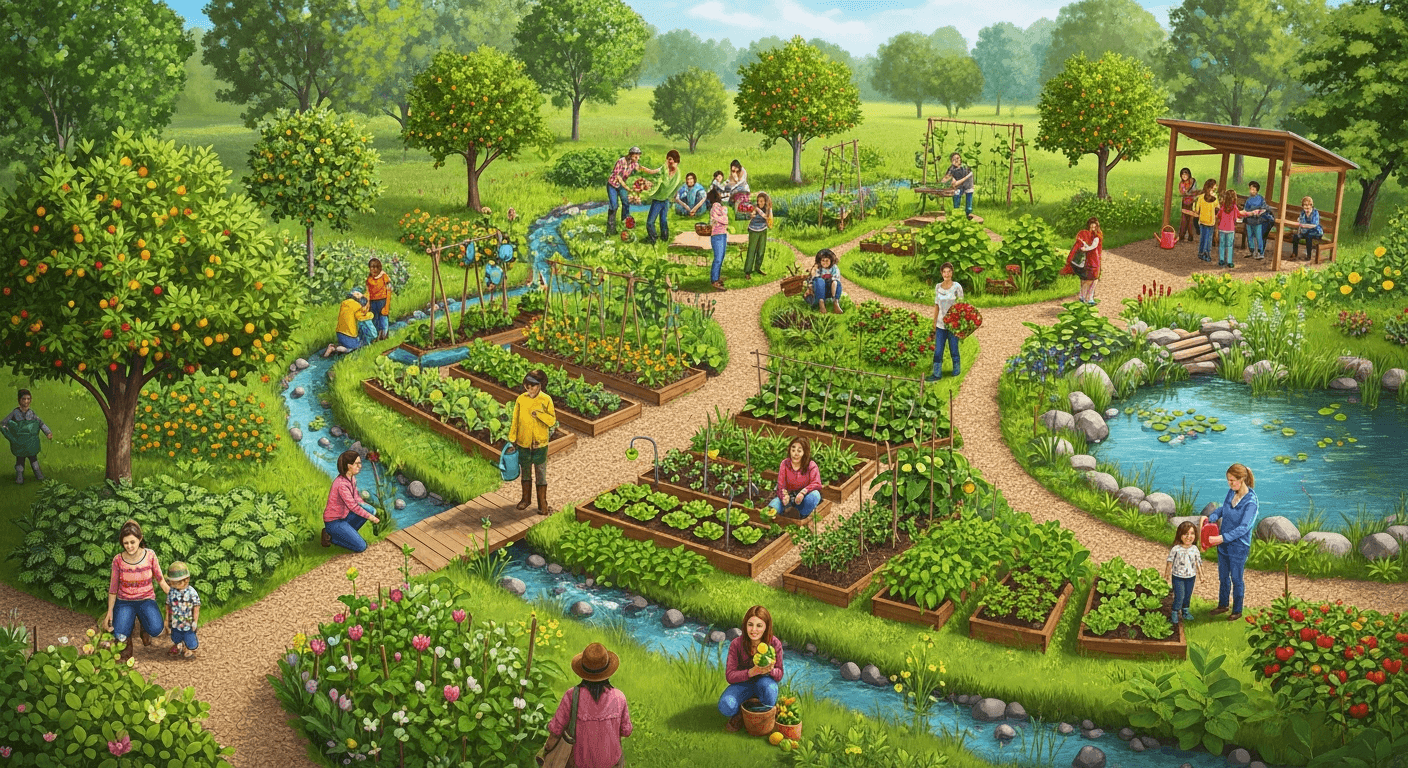

Your Permaculture Design Journey Starts Here
Introduction
Are you ready to change how you connect with the world around you? Your permaculture design adventure starts here. This guide is your start to learning about ecological design. You will learn to work with nature, not fight against it. When you use permaculture principles, you can build beautiful and useful sustainable systems in your own space. You could want a green backyard garden, or maybe look for a life in sustainable living. This path will give you the tools and knowledge you need to make that happen.
Discovering Permaculture Design: Your First Steps

Starting your journey with permaculture means you first need to understand its key ideas. Permaculture is not just about gardening. It is a way to plan and create sustainable systems that copy how things work in nature. In the beginning, you should look closely at your surroundings. Learn the main permaculture principles. You will see how these ideas bring together your garden, your home, and your community.
This first look will help you get to know the main ideas, like site analysis and the rules that lead every design. You will hear about the early leaders in permaculture, such as Bill Mollison. You will see how their ideas for a better world matter a lot today. Let's find out what permaculture is and why more people are talking about it now.
What Is Permaculture and Why Does It Matter?
Permaculture is a word that Bill Mollison came up with. It means both "permanent agriculture" and "permanent culture." This is a way of designing things in the world so that people and nature can live together in a good way. With permaculture, you use some set rules to build places for people that do not hurt the earth.
The main idea in permaculture is building resilient systems. These systems are strong. They can feed us and take care of us. They do not use up the planet's resources. In fact, they help us give back to nature, so the earth can stay healthy for a long time.
The core of this practice comes from three main permaculture ethics. These are Earth Care, People Care, and Fair Share. These ethics help us think about what we do now and how it can help people, nature, and their future. We should feel a need to take care of the earth and each other. The goal is not only to keep things the same, but to make things better for everyone. It's about working together to heal and improve the world for the next people who come after us.
Why does this matter today? The world has many problems when it comes to the environment and people. Permaculture helps by giving us ways to fix these issues. It is a way to set up systems that can last and grow, even when things change. If you practice sustainable practices, you help make the planet healthier. You also help make the future safer for yourself and for other people.
How Permaculture Principles Apply to Everyday Life
You may not know how simple it is to bring permaculture principles into your daily life. You do not need a big yard for this. Sustainable living is not only for people who work the land. This way of thinking is for all of us. You can start with small, smart choices. These can make a big difference as time goes on.
You can start by looking at the patterns around you and in your home. Notice where the sun shines on your balcony. Think about how you can take rainwater that falls on your roof. Watching these things is the first step to building more good and sustainable systems. The goal is to make your life feel easy and more a part of nature.
Here are a few easy ways you can use these ideas in your daily life:
-
Grow your own food: You can plant your own food even in a small space. A little container with herbs or greens on your window ledge gives you fresh things to eat and helps you go to the store less.
-
Improve soil health: You can start a compost bin and put your kitchen leftovers in it. This helps make rich soil for your plants. It also cuts down on trash and gives a little back to the earth.
-
Conserve resources: You can save water, energy, and other things by making small changes. Turn off the lights when you leave a room. Fix faucets if they drip. Use things you can use more than once. These simple habits fit with the ideas of permaculture.
The Growing Interest in Permaculture in the United States

In the United States, more people are getting interested in permaculture design. They want to find better ways to live that can last and help the world be strong. A lot of people feel worried about climate change, having enough good food, and building stronger community ties. Because of this, permaculture design is becoming a popular way for people to move forward.
For many people, the journey starts with wanting to grow their own food and manage their own land in a better way. You can do this on a small backyard in the city or on a big piece of land in the country. With permaculture, you get the tools you need to build good and strong regenerative systems. This helps you make real changes where you live.
The appeal of permaculture is not just for one home or yard. More people now use it to help with community development. It can help make local places that grow food, parks for people to enjoy, and help neighborhoods be stronger. As people learn about the good things it can do, permaculture is turning into a strong way to make positive changes in towns and cities all over the country.
Understanding Permaculture Design Classes
A permaculture design class is a great way for you to learn more about how these ideas work. The courses have a comprehensive curriculum that goes over both the ideas and hands-on practice. You can pick an online option to work at your own pace or join a workshop in person. The main goal is to help you get the skills needed to design your own sustainable systems.
This learning experience will give you a good start in regenerative design. A design certification course will help you learn all the skills you need. It will follow a set plan, so you get the knowledge that experts around the world trust.
Let's talk about what you will go through in these classes, the ways you can join them, and how you can pick one that is approved.
What to Expect in a Permaculture Design Class
A permaculture design course, also known as a PDC, is a hands-on way to learn. In a typical online design course, you go through weekly lessons. These lessons come with recorded talks, readings, and tasks to do. This way, you can study the material when it suits you best. It gives you more control over your time, so it is easier to fit into your life. During the course, you get to use what you learn and work on a real design project.
The curriculum will help you get a solid foundation in permaculture theory and practice. You will learn how to look at a landscape the right way. You will also find out how natural patterns work. This will help you build a design system that brings water, soil, plants, and social structures together. The main goal is to teach you practical skills you can use right away.
Expect to cover a wide range of topics, including:
-
The core permaculture ethics and principles are important to know from the start.
-
You will get to learn about site analysis and ways to assess it.
-
There is a focus on water management, soil health, and how to create food forests. Most of the time, these courses end with a final design project. In this project, you make a full plan for the site you pick. You also get helpful tips and feedback from instructors while you work on it.
Online vs. In-Person Permaculture Design Courses
Choosing between online and in-person permaculture design courses depends on how you like to learn, your time, and what you want from the course. Online courses are great because you get a lot of flexibility. You can learn from anywhere. You also often get unlimited access to the materials, so you can go back and check what you need any time.
Most online permaculture design courses focus on helping you work on your own property. This makes the learning experience feel personal and more useful.
In-person courses give you the chance to learn by doing. You also get to talk right away with teachers and classmates. These classes usually happen over a few weeks. People stay at the location and learn together. During the course, you and others work as a group on a design for the host site. This is good for learning with others and meeting new people. It is also great because you get helpful feedback from your peers in a lively, shared setting.
Both formats come with their own strengths. Some people get more out of joining both types of courses at different times in their permaculture journey. This helps them have a more complete education. Here is a simple comparison:
Feature Online Courses In-Person Courses Flexibility High; learn at your own pace. Low; fixed schedule and location. Design Project Typically your own site. Usually the course host site. Pacing Spread out over weeks or months. Intensive, often over two weeks. Interaction Digital forums, peer feedback. Direct, face-to-face collaboration. Accessibility Learn from anywhere; often more affordable. Requires travel and lodging costs.
Recognized and Accredited Permaculture Design Class Options
Yes, you can find many online permaculture design courses that you can do from home. Make sure the course you pick is certified by a trusted group. This way, you know the program follows set rules and your permaculture design certification will be seen as good by others in this field.
One important group in the United States is the Permaculture Institute of North America (PINA). A course that is certified by PINA, such as the one at Oregon State University, uses a trusted learning plan. This program is checked and approved. When you finish it, you get an internationally recognized permaculture design certificate. This shows that you finished a full 72-hour permaculture design course that covers all the main topics.
Choosing an accredited program helps you feel sure that you are getting a good education. The teachers in these programs often have a lot of experience and know a lot about different places and weather. When you sign up for a trusted course, you know the time and money you spend will give you a strong certificate. This can help you get more chances to grow in your field.
Choosing the Right Permaculture Design Course for You
There are many choices when it comes to finding a permaculture design course. Because of that, it can feel hard to know which one is right. The best way is to look for a program that will best suit what you want, how you like to learn, and how much money you want to spend. Some people want to go at their own pace, while others may want a fast, hands-on workshop. No matter what you pick, there is a permaculture design course for you.
Think about what you want to get from your design certification course. Do you want to change your backyard, begin a new job, or feel closer to nature? When you know what drives you, it gets easier to pick the right course. You can see which design certification course comes with the valuable resources and support that fit you best. In this text, we will look at the things to think about, see how different courses are different, and talk about what to check for with teachers.
Factors to Consider When Selecting a Course
To pick the best permaculture design course, first think about what you need and how you like to learn. Ask yourself how much time each week you will have for the class. Some people feel good in a set, structured space, while others want to work at their own pace. It is also good to know your goals. Do you want to use permaculture design for your own property, or are you looking to work on bigger community plans? Take time to think about which way is better for you and what you hope to get out of the design course.
The course content is a big part to think about. A good program will teach the core ideas well. It may also let you choose some special areas to focus on. Check if the topics match what you want to learn, like food forests, water work, or city permaculture. Make sure the course puts focus on practical skills. It should have hands-on work or design projects that you can use right away.
Here are a few key factors to weigh:
-
Instructor Experience: Check the background of the teachers. Make sure they have hands-on experience in climates like the one you live in.
-
Community and Support: See if the course gives a good support system, such as forums, mentors, or feedback from other students.
-
Cost and Value: Look at how much you pay and what you get. Think about things like having access to the materials for life, help from the teacher, and getting a certificate.
Comparing Free and Paid Permaculture Design Courses
The biggest difference between free and paid permaculture courses is about how deep the content goes, how much help you get, and if you receive a certificate. Free permaculture courses are good if you want to learn the basic ideas. You do not have to pay anything. These courses give you a strong start and help you see if you want to keep learning more about this topic.
However, paid courses give you a better and more organized learning experience. You get a clear plan to follow. There is also personal feedback from teachers who know a lot. You join a group of other students too. This kind of support is good when you have hard design problems to solve. You can also get help for your own projects.
Here is a quick look at what you can usually expect:
-
Free Courses: These give you starter lessons and basic knowledge. But, you will not get much help from teachers or receive a certificate at the end.
-
Paid Courses: You get a comprehensive curriculum. There is personal feedback from instructors, and you get community access to talk with others. You will also earn a design certificate that people know is real.
-
Resources: Paid programs often give you unlimited access to many resources. You can get video lessons, templates, and reading materials. You will be able to come back and use these even after the course ends.
How to Evaluate Course Curriculum and Instructors
When you look at a permaculture course, you should check the curriculum first. A good, comprehensive curriculum will talk about ethics and rules. It will also spend a lot of time on real topics like how to manage water, build soil, and plant groups together. Look at the course plan to see if it matches what you want to learn. Make sure it gives you a solid foundation for your design work.
Next, have a good look at the people who will teach the course. People with a lot of experience are some of the most valuable resources you can get in a course. Find out about their past---where did they practice permaculture? Have they done any work with teaching or design in different places and kinds of weather? You can read about the teachers' backgrounds. You can also watch any short videos if there are any. These will help you get to know their way of teaching and how much they know.
Think about the overall value you get. Does the course give you useful resources like practical templates and case studies? Will these help you after the class is over? A good course will be well-planned. The teachers will know what they are talking about. You will learn more than just theory. You will get confidence and the tools to use what you know in real life.
Course Structure and Learning Formats
The course structure in a permaculture design program helps you learn step by step. This gives you a rich learning experience. Most courses have weekly modules. Each week, you will look at certain topics. This way, you get new ideas in small parts and can use what you learn right away.
A lot of these programs have project-based learning as a main part. You get to work on a design during the whole course. At the end, you put everything together for your final design project to show off your new skills. With this hands-on method, you learn how to take ideas from books and use them for real.
Let's talk about the usual topics in these courses. We will also look at the role of final design projects, and why working with others in the community is important while you learn.
Typical Modules and Topics Covered
A usual permaculture design course has a set of modules. These cover many topics. The first lessons focus on permaculture design principles and ethics. The basics will help you see how each part in a system can work with others in a good way.
As you move forward, the lessons will help you learn with hands-on practice. You will read about topics like organic gardening, soil science, and composting. You will find out how to make soil healthy and full of life. There will be water harvesting ideas too, like making swales and rain gardens. These parts show you how to get, keep, and use water in a smart way at your place.
The curriculum is not just about the garden. It also covers bigger ideas that are important for complete design. These ideas often include:
-
Appropriate technology: This is about using simple tools that work well. It also means adding renewable energy sources.
-
Invisible structures: This is about setting up ways for people and money to go around in a group. These systems help the community stay strong.
-
Animal systems and forestry: This is about how to bring animals and trees into your plans. When you do this, your land or site will work better with nature.
Project-Based Learning and Hands-On Experiences
Project-based learning is a big part of most permaculture design courses. It lets you use what you read and turn it into practical skills. You will not just learn about permaculture design; you will actually make your own. This way, you do not stay a passive learner. From day one, you start working as an active designer.
During the course, you will work on many design projects. Each project will help you learn more and practice new skills. These assignments will take you step-by-step through the design process. You will start with observation and site analysis. Then, you will move to planning how to make the space better and ready for use.
One great thing is that you can pick a site of your choosing to work on. It might be your backyard, a community park, or a bigger place. This hands-on way helps you get to know site analysis and designing for real life.
This course lets you work on a real project. That makes the learning experience feel important and helpful. At the end of the course, you will not only get a certificate. You will also leave with a polished design portfolio you can use right away. Doing the work with your own hands helps you get the ideas better. It also gives you confidence for new tasks in design.
Community Interaction: Forums, Peer Feedback, and Mentorship
Community is a big part of permaculture. This is clear in the way courses are taught. Online forums and discussion boards make it easy to meet other students from all over the world. In these spaces, you can ask questions and talk about your own progress. You also get feedback from other students about your design work. When you see how people handle problems in other climates, you learn a lot and get many good ideas.
This space helps people build deep connections and feel a strong sense of friendship. You are not learning on your own here. You are part of a global group filled with others who think like you do. Many courses also give you the chance to get help from mentors. Instructors or teaching assistants offer guidance for your projects. They support you, whether you are working on a small balcony or a community garden.
This kind of interaction is very important. It makes the learning experience better. It can give you motivation to keep going. You also get to meet new people who could be your friends or work with you in the future. These connections do not end when the course is over. They can help you for a long time as you move ahead with your permaculture journey.
Meeting the Prerequisites: Getting Ready for a Permaculture Design Class
If you are thinking about joining a permaculture design class, you could wonder if you need some special background. The good thing is most courses are made for new people. So you do not need any earlier knowledge to join. What they look for most is that you want to learn and that you care about making things better.
These courses are set up so you can learn at your own pace. You start with the basics and then build your knowledge step by step. Still, if you know some of the ideas or tools before you start, it can make things easier for you. It will help you get more out of the course and feel good about your progress. In this text, you will read about what it helps to know first, the tech you need, and how to get yourself ready to keep learning and growing on this journey of continuous growth.
Prior Knowledge, Experience, and Tools Needed
There are usually no strict requirements for you to join a permaculture design course. You do not have to know a lot before you start. But, if you have some ideas about gardening, it can help you feel more ready. The course will teach all the basic things you need to know. Still, if you come in with some practice or knowledge, you might get the harder parts sooner. A little bit of experience with gardening can give you a good start, but it is not a must.
The most helpful thing you can have for this is curiosity and being open to look at what is around you. It also helps if you have some experience in things like ecology, landscaping, or working with your community. This can be a good starting point. But the lessons are made so that anyone can join, no matter where they come from.
You do not need a lot of tools to get started. For online courses, you will need a computer. It is also important to have good internet service. It helps to know how to use programs like Google Slides, Docs, and Earth Pro. These programs are useful for making your design report. The online courses will show you what to do. The main goal is to learn the design process, not to get too caught up in tough software.
Navigating Course Requirements and Technology Essentials
To get the most from online courses, you need to feel good about using some simple tech. A fully online course asks for some basic know-how with computers so you can do well. The main things you need are a good computer and a strong internet connection. You use these to watch classes, read, and join talks with others.
Most course requirements are simple. You should know how to use the online learning platform, watch videos, download files, and upload your work. Some courses ask you to use free online tools for site analysis and making design reports. For example, you might use Google Earth Pro and Google Slides. You do not have to be an expert before you start, but having some practice with these tools can help things go more smoothly.
The best thing to do before you sign up for the course is read the technology requirements page. This will help you see what hardware and software you need. Spend a few minutes looking at these programs before the first day. It will make things smoother and let you spend more time learning. You will not have to worry as much about tech problems.
Preparing Yourself for Success in Permaculture Education
Success in a permaculture design course depends on how you think and how much you join in. The design course will cover many interesting things, but it needs your hard work and effort. If you want to build a solid foundation for continuous growth, go into the course with an open mind. Also, be ready for active participation all the way through.
Set aside some time every week for your coursework. A usual PDC can take about 10 to 15 hours each week. You will need this time to watch lectures, read, and work on your design project. Try to treat your studies as important. This will help you stay on target and get the most from the course. If you have any questions, feel free to ask. You should also talk with your teachers and other students.
To help you do well, you should think about these steps to get ready:
-
Choose your design site early: It is important to pick your site soon. Take some time to think about what spot will work for you before the course begins.
-
Embrace the learning process: Permaculture is something you learn your whole life. Think of the course as just the start, not the finish, of what you will learn.
-
Stay organized: Stay on top of your deadlines and work. This will help you not get behind when things move fast.
Earning a Permaculture Design Certificate
Finishing a design certification course means you get your permaculture design certificate. This shows you have completed a full 72-hour program. You know the key permaculture principles and know-how in permaculture design. Getting this certificate is a big step. It marks the end of the course. But it also is the start of you making a real, positive impact with what you have learned.
Getting this certificate means more than having a paper to show. It shows your hard work and how much you care. The certificate helps you show people you have the skills for the job or for your own life. Now, let's look at how you get the certificate, how it is seen all over the world, and what it can add to your life.
Overview of the Certification Process
The process for getting your certificate in a permaculture design certification course is easy to follow. You will finish several assignments as you go through the course. Each assignment helps you learn new things and practice what you have already learned. This step-by-step checking makes sure you keep up and use the permaculture design ideas in the right way.
The main part of the certification is the final design project. You will need to bring together all you have learned and use it for a real place. The design portfolio you put together will show how you can look at a landscape, use permaculture principles, and make a plan that helps the land renew itself. Your final design project is what your last grade will be based on.
When you finish this course and your work has been checked, you get the certificate. The main steps often are:
-
Completing all assignments: Make sure you turn in the weekly or module assignments on time.
-
Finishing the final design project: Finish and give a good site design portfolio.
-
Passing the final assessment: Your instructor needs to say you did well on your project and took part in everything.
Is a Permaculture Design Certificate Internationally Recognized?
Yes, a permaculture design certificate is usually known around the world. But it should come from a good course that follows the needed 72-hour plan. This plan was made by the founders of permaculture. People see it as the main guide for starting permaculture design education.
If you get an internationally recognized permaculture design certificate, it shows people in the global permaculture group that you have good knowledge and training.
To make sure your certificate is trusted, you should pick a program that is accepted by a well-known group, like the Permaculture Institute of North America. A certificate from a group like the Permaculture Institute of North America shows that the course, the teachers, and the things you learn reach high standards. This helps add trust to what you have learned and your qualification.
This recognition shows that people will know and value your skills and what you know in permaculture all over the world. It does not matter if you want to work on projects in another country, work with designers from other places, or join a group of people who think like you. Your certificate will help. It acts as a common language and a trusted proof of what you can do.
What's the Value of Certification for Career and Personal Growth?
Getting a permaculture design certificate is good for both your own growth and your career. When you take this permaculture design course, you will learn how to build better, more sustainable systems for your life. The skills you get help you live in a way that does not harm the Earth. You will feel a deeper connection with nature. This also gives you useful, practical skills to be a good caretaker of the land and practice real environmental stewardship every day.
From a job point of view, the certificate can help you find many new chances. It shows companies that you are a good fit for jobs in areas like landscape design, sustainable farming, ecological consulting, and teaching. If you want to start your own business, this certificate can make you look more trustworthy. It also gives you the basic knowledge you need to offer your own design services.
In the end, the real value of the certificate is that it lets you make a positive impact. You can use your skills in your own garden, in a local project, or in your job. When you do this, you become someone who helps bring change. You will have the tools you need to design regenerative systems that heal the land, bring people together, and build a more lasting and good future for all.
Applying Permaculture Design Skills in Daily Life
The real power of permaculture shows up when you use the ideas you learn in your daily life. That is when you see your knowledge working for you. The practical skills you get are not just for big farms. They help you build sustainable systems anywhere, like your kitchen or your community.
When you learn about permaculture, you start to see the world in a new way. This can help you when you want to redesign your garden, save water at your home, or take part in community design projects. Let's look at how you can change your home garden, help in community design, and read about people who have done the same thing.
Transforming Your Home Garden with Permaculture
Yes, you can use your new permaculture design skills right away, even at home. A class in permaculture design will help you change a normal garden into a place where all things live and work together. You will start to see your garden as more than single plants. It will feel like a network where everything connects and grows together.
The focus moves from working all the time to using smart garden design. You will get tips on how to make your soil health better. This happens through composting and mulching. These steps mean you do not have to use as much fertilizer. You will also learn about water conservation. You can make rain gardens or swales so you make the best use of all the water you have. This way, you get a strong and productive garden.
Think about changing a part of your yard into a small food forest. There can be fruit trees, berry plants, herbs, and some vegetables to grow every year. Each plant works with others and helps make the soil better. You will get fresh food, bring in good bugs, and help the land. A food forest in your backyard can look nice. It can feed you and be good for nature, too.
Bringing Permaculture Principles to Community Projects
Permaculture principles are very useful when people use them in a group or community. The skills you get can help you start or join projects that help your area be strong and support a way of life that is about being good to the earth. A community garden is one good way to do this. You can help plan a place where everyone grows fresh food and learns together. A community garden helps people practice sustainable living and helps their whole group by using permaculture principles.
When you use what you learn, you can help build systems that work better and are easier to look after. You might set up a compost system for your neighborhood. You can design a way to catch rainwater for a park. Or you may help set up a group to save seeds. These projects help to give the community access to healthy food and green spaces.
Working on community projects is a good way to practice environmental stewardship. You can also share what you know with other people. This helps people come together and feel stronger. They feel like they can help shape the world around them. With your permaculture training, you have a guide to lead others and encourage them. When you do this, you create more good things for the people in your community.
Real-Life Stories from Course Graduates
The real-life stories shared by people who took the course show how much learning about permaculture can change your life. A lot of students join the course because they want to learn how to grow their own food. By the end, they feel ready to set up whole systems. For example, Linda Nash started a business where she helps others grow their own food. Donna Devadoss used what she learned to make a food forest for the community on public land.
Many graduates say the learning experience was better than what they expected. Toni Taylor said the course had great content. She also talked about the skill of the teachers. Toni felt she got good value for her money early in the course. The teachers gave personalized feedback. Students like Elyes took part in a hands-on design process. This helped them feel sure they could work on any piece of land in a professional way.
The positive impact is not just for your own garden or job. It can be seen in other areas too. Here are some examples:
-
Community Building: Graduates have started gardens in their communities. Some have written children's books about sustainability. Others have made friends and found people with the same goals.
-
Career Advancement: Many choose new work paths after. Some take fellowships. A few get work as consultants in ecological design.
-
Personal Transformation: Students often say this course opened their eyes. It changed how they look at everything in the world and their place in it.
Conclusion
Starting your permaculture design journey can change you and the world around you. When you learn about the ideas of permaculture and use them in your daily life, you help make things more sustainable. You also start to feel closer to nature. You can sign up for permaculture design courses or join projects in your community. What you learn will help you grow strong, healthy spaces in your garden and other places too. The small steps you take now will help build a better future for everyone. If you want to learn more, check out the permaculture design courses you can find near you!
Frequently Asked Questions
How long does it usually take to complete a permaculture design course?
The time you need to finish a permaculture design certification course can be different. A standard online course that covers a comprehensive curriculum will often last about 10 weeks. You may need to spend 10 to 15 hours each week on it. Some professional options can go on for up to 20 weeks. A lot of these online courses give you the chance to work at your own pace, so you can fit a permaculture design certification course into your life more easily.
Can I use what I learn in a permaculture design class in my own backyard?
Yes, that's right! The practical skills you get are great for your daily life. You can use permaculture principles in your garden design to help improve the soil, save water, and grow more food. This is one of the most common and rewarding ways to use what you learn about permaculture. It helps you make your living space more sustainable.
What career opportunities are available after completing a permaculture design certificate?
A permaculture design certificate can help you grow in your work. People with this certificate often work in ecological design, sustainable agriculture, landscape consulting, and teaching. It gives you the training you need to start your own permaculture design business, take care of sustainable systems, or work with non-profits to make a positive impact on communities.