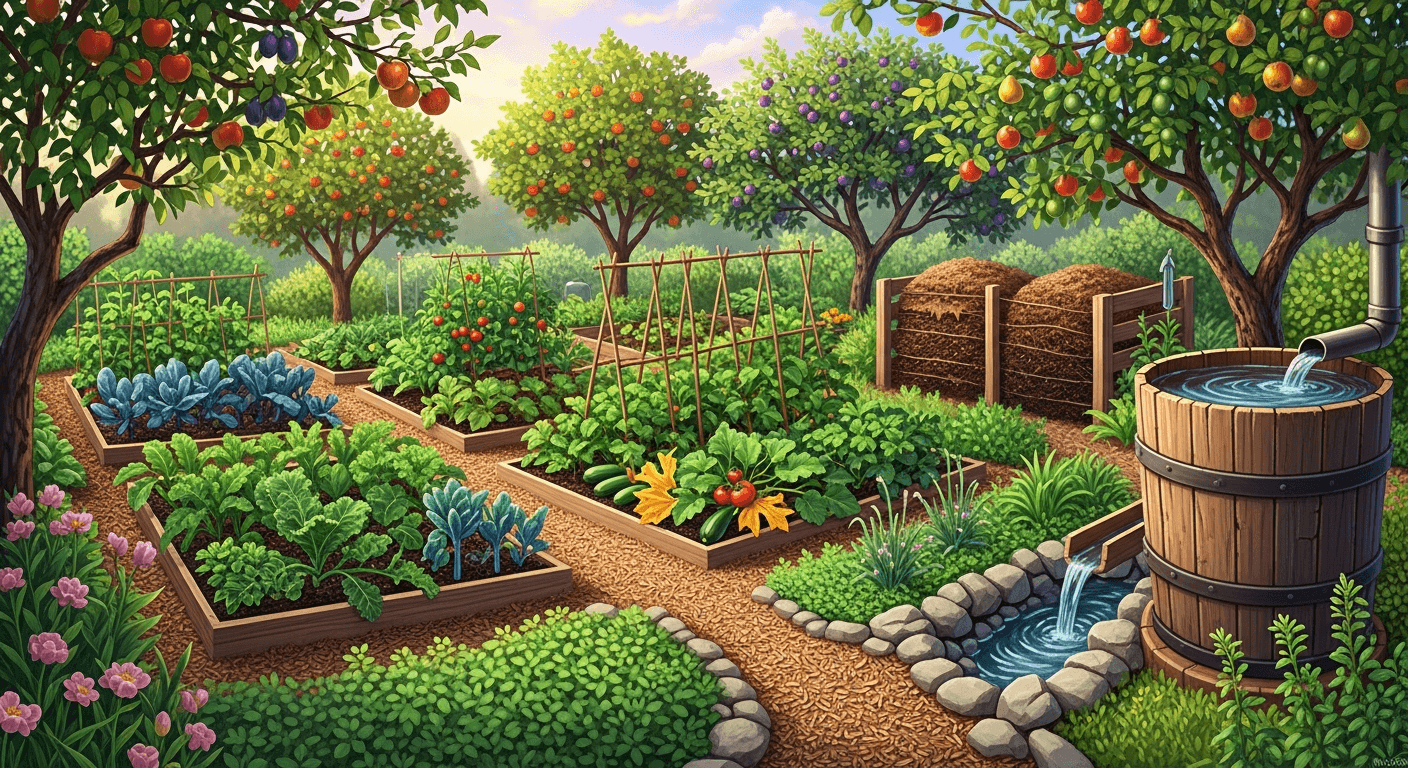

Essential Tips for Effective Permaculture Design Success
Introduction
Think about a garden that is not only nice to look at, but also acts like a living system on its own. This is what permaculture is all about. Permaculture is a way to work with nature, not against it. The idea started in australia in the 1970s with bill mollison and david holmgren. Permaculture design principles can help you set up a system that is strong and takes care of itself. This type of garden will be good for you and also help the earth. Let's see how to bring permaculture to your own place.
Foundations of Basic Permaculture Design

The main ideas of permaculture come from Bill Mollison and David Holmgren. They focus on building human systems that act like natural ecosystems. Permaculture is a way to connect different things in your home or farm. This could be the house, the garden, and the animals. All parts should work together as one unit. This method helps with sustainability and makes your place stronger and more able to bounce back from changes. A key part is making healthy soil with organic matter. It also means setting up systems that use what they have over and over, which keeps things running smoothly.
Permaculture is not like normal gardening. Most gardening keeps parts separate. Permaculture looks at how these parts work together. In permaculture, you set up a system so each thing helps the next. This be great because it can make your daily work easier and more simple.
We will look at what permaculture is and how it is different from regular gardening. We will also talk about the main ideas you need to know in permaculture.
What Is Permaculture and Why Is It Important?
Permaculture is a way to plan your life that works with nature. Bill Mollison and David Holmgren came up with this idea. It is made to help you get what you need to live in a way that is good for the earth. Permaculture uses what you see in natural ecosystems to make things work better and last longer. The main ideas are earth care, people care, and fair share.
Its importance is in how it helps build resilience and sustainability. Permaculture lets you use resources without running out. These methods work to improve the soil by adding organic matter. They help increase biodiversity. They also cut down on waste. When you follow the way nature works, you set up a garden or home that can look after itself. You need less help from outside.
This way of design is about more than just gardening. The permaculture design principles can help you change many parts of your life. These 12 main ideas show you how to make your day better, not just your land. You can use them on a big farm, in a small yard, or even at home. With permaculture, you help yourself and the world around you. This way of thinking is good for people and for nature.
Key Differences Between Permaculture and Traditional Gardening
Permaculture is not the same as regular gardening. It looks at the big picture and thinks about the long term. Regular gardening usually takes care of plant growth for just one season. Plants are put in neat rows. But, permaculture works to set up a system that takes care of itself. It copies how natural ecosystems function. This way, every element helps the others and works well together.
A permaculture system does not depend on outside things like fertilizers. Instead, it works to find answers from inside the system. For example, it plans how to handle water flow and uses renewable resources to help build up fertility as time goes by. The main idea is to make a closed-loop system where what comes out of one part can be used by another.
Here are some key distinctions:
-
System Integration: In permaculture, plants, animals, and buildings are all put together so that they can help each other. In everyday gardening, these things are usually kept apart.
-
Resource Use: Permaculture teaches you to collect and save energy and water, so they are not wasted.
-
Soil Health: Permaculture uses compost and mulch to make the soil better. The main idea is to feed the soil instead of just focusing on the plants.
-
Long-Term Focus: The way permaculture is planned lets you build a strong system that lasts for years, not just for one growing season.
The 12 Principles of Permaculture Design Explained

The 12 permaculture principles were created by Bill Mollison and David Holmgren. These ideas help people build systems that can last a long time. The permaculture principles act as guides to help us do better work in less time. To do this, we look at nature and use what we learn. These principles also ask us to use renewable resources like solar energy. This lets us set up systems that keep working well on their own and help with sustainability.
If you follow these guidelines, you will be able to design a space that is both nice to look at and works well. These rules can help you spot connections and patterns. With them, what was once a problem can become a fix. Let's look at some easy, real-life examples of each rule to see how they can be used in different places.
Simple Examples for Each Permaculture Principle
Using the 12 permaculture principles is not hard. You can take easy steps that help your garden be strong and grow well. For example, you can store energy by collecting rain in water tanks. You can also keep your summer harvest for later. If you want your garden to have more resilience, try to plant many kinds of crops. That way, if one does not do well, you will have others to use. These permaculture ideas make a big difference.
These ideas suggest that it is good to choose slow solutions and give things time to grow and work well together. This means you do not have to do everything at once. For example, you can start with just a small garden bed. Later, you can make it bigger as you learn more. You can also use the edge of the driveway in a new way. Try planting herbs there since many people do not think of that spot. With this way, you can build a balanced system with less work.
Here are some clear examples for each principle:
Permaculture Principle Simple Example 1. Observe and Interact Watch where the sun hits your yard before deciding where to plant your garden. 2. Catch and Store Energy Install a rain barrel to collect water for dry periods. 3. Obtain a Yield Grow vegetables for food, herbs for medicine, or flowers for pollinators. 4. Apply Self-Regulation and Accept Feedback If a plant isn't thriving, replace it with one better suited to the conditions. 5. Use and Value Renewable Resources Use fallen leaves as mulch to enrich the soil with organic matter. 6. Produce No Waste Compost kitchen scraps and yard waste to create nutrient-rich soil. 7. Design from Patterns to Details Plant in spirals or keyhole beds to maximize space and access. 8. Integrate Rather Than Segregate Let chickens roam the garden to eat pests and provide manure. 9. Use Small and Slow Solutions Start with one small garden bed and expand it gradually over time. 10. Use and Value Diversity Plant a variety of plants to attract different beneficial insects and build resilience. 11. Use Edges and Value the Marginal Grow mushrooms on woodchips along garden paths. 12. Creatively Use and Respond to Change Use a fallen tree as a base for a new raised garden bed (hugelkultur).
How to Apply Principles to Small or Urban Gardens
You do not have to have a big piece of land to try permaculture. There are creative ways you can use permaculture, even if you have a small yard or live in the city. You can start this on a balcony or anywhere you have some room. It is important to use every spot, even going up. Think about how to use all the space you have. That is how you can build a working space for plants and animals, no matter how small.
If you are a gardener in the city, it's important to use your resources well. You can catch rain in small water tanks or big bottles, even from a downspout. Also, you can take kitchen scraps and food waste, then turn them into compost. A worm bin or a small tumbler can help with this. The compost will give your plants what they need to grow.
Here are a few ways you can try permaculture in a small space:
-
Vertical Gardening: Grow a variety of plants up walls and on trellises.
-
Container Gardening: Plant your favorite things in pots, window boxes, and hanging baskets.
-
Companion Planting: Put plants together that help each other. This can keep away pests and bring in pollinators.
-
Worm Composting: Use a vermicompost bin at home. Turn your food waste into fertilizer for your gardening.
-
Microclimates: Give heat-loving plants a spot in the sun. Put others that need shade in cool corners.
Starting Your Permaculture Garden at Home
If you are ready to start your own permaculture garden, you first need to observe. Take some time and look at your space before you dig or plant anything. Watch how the sun goes across the sky, where water moves, and what daily patterns you notice. This will help you make a system that will work with your environment, not fight with it.
From there, you can start to plan the parts of the garden. Think about how you will use compost or manure to make the soil better. Choose the plant species that will do well in your garden. Try to bring in beneficial insects and pollinators, as they help fight off pests in a natural way. If you follow a few easy steps, your gardening journey will get off to a good start.
Essential Steps to Set Up a Permaculture Site
Setting up a permaculture site starts with looking at your land closely and making a plan. You have to know what makes your property special. Look at things like sun exposure, wind direction, and water flow. When you put these things on a map, it will help you set up everything in the best spots. Doing this can stop problems like erosion.
A big idea in permaculture is something called zoning. In this plan, you put things where you need them, based on how often you use them. For example, you might have an herb garden close to your kitchen door so you can reach it fast. You could put an orchard farther out. This way of setting things up follows your daily patterns. It helps make your work easier and your day flow better.
Follow these essential steps to get started:
-
Observe and Map: Take some time to look at your place. Draw a map showing things like where the sun hits, how the wind goes, and where water moves.
-
Define Zones: Set up the best layout by thinking about what you use most. Put high-traffic spots like the vegetable garden close to your house.
-
Start with Soil: Right away, work to build good soil. Add compost, mulch, and manure to help it.
-
Manage Water: Make a plan to use water well. Set up ways to catch, store, and spread water. Swales or rain barrels can be helpful.
-
Implement Slowly: Add new things one by one. Make sure each thing works well before you move on to the next.
Permaculture Techniques for Vegetable Gardeners
For vegetable gardeners, permaculture gives clear ways to help food production and build resilience. A big idea in permaculture is not to plant in only one type of row. It is good to use "guilds" instead. A guild is a group of plants that help each other grow. This way, your vegetable garden has a good balance and can work better.
A main way to garden well is to build and keep good soil. To do this, use no-till or low-till ways and cover your garden with lots of organic matter. Keep adding compost too. When your soil is healthy, it is full of microbes. These small things feed your plants. They also help fight off pests and diseases. So, you do not need as much from outside, like fertilizers or chemicals.
Here are some good permaculture techniques you can use for your vegetable patch:
-
Sheet Mulching: Put down cardboard, compost, and straw in layers. This helps you make new garden beds without digging.
-
Companion Planting: Grow plants like tomatoes next to basil. This helps keep away pests and brings in helpful bugs.
-
Polycultures: Plant many plant species in the same bed. This makes the area have more biodiversity and can give you a better harvest.
-
Integrated Pest Management: Bring in pollinators and good insects like ladybugs. These can help you keep pests away naturally.
-
Crop Rotation: Move your vegetable families to different spots each year. This stops the soil from losing its goodness and helps control disease.
Common Mistakes in Permaculture Design and How to Avoid Them
Starting out with permaculture can be exciting. But, if you are new to gardening, you might run into a few common mistakes. A big one is trying to do everything too fast. If you rush, you may feel stressed and tired. Permaculture needs a long time. The best way to do it is slow, steady, and with thought. That is how you get good results.
Another common problem is not planning things the right way. This can cause systems to not work well with each other. It is important to know about the common mistakes people make when planning. This helps you reach goals for biodiversity and sustainability. When you learn from designers who have done this before, you can stay away from these mistakes. You will be able to build a strong system that grows well and lasts a long time.
Planning Pitfalls and Overlooked Factors
One big mistake many people make in permaculture is not planning enough. They feel excited to begin, so they might bring home livestock before building good shelters or putting up fences. Some people also plant a garden before making sure the soil has enough fertility. When you do not plan well, it can make you feel upset and things may not go the way you want.
Too much planning can be a problem, too. This often leads to "analysis paralysis," when nothing gets finished. It is good to find a balance. Not thinking about things like water management may lead to big problems. Erosion or dry gardens are common issues. If you put things, like the compost bin, too far from your kitchen, it makes the work harder. The system will not work well.
To avoid these common mistakes, watch out for:
-
Poor Placement: If you set up things without thinking about how you will get to them and how you move around, you might put a garden on the wrong side of the driveway.
-
Ignoring Water: Some people do not think about how water tanks can store water or how to get runoff to go where you want it.
-
Neglecting Soil: A lot of people start planting without putting compost and manure in the soil to make it healthy first.
-
Moving Too Fast: People often try to start many things at one time, and this can be too much.
-
Not Observing: It is easy to skip the early step where you just watch the land, but this step is important.
Learning from Experienced Designers on Best Practices
One good way to do well in permaculture is to learn from people who have done it before. These people know the ups and downs, and they can help you skip mistakes. They will tell you smart ways to make things work. This can help you save your time, energy, and what you use, both now and in the long term.
You can meet people who know a lot by joining workshops, online classes, or community gardens. There are many designers who share what they know in blogs, videos, and on social media. When you join this group, you will get good tips and the best ways to help build resilience and work toward sustainability.
Here are some ways to learn from the experts:
-
Take a Course: Sign up for a Permaculture Design Course (PDC) or attend a workshop to learn more.
-
Join Local Groups: Take part in community gardens or go to permaculture meetups that are near you.
-
Read and Watch: Keep up with blogs, YouTube channels, and read books from well-known permaculture teachers.
-
Volunteer: Give some of your time to help at a demo site or a permaculture farm.
-
Find a Mentor: Talk with a local designer who can help you with advice and feedback.
Conclusion
To sum up, good permaculture design means you need to think things through and see how everything in nature connects. If you learn the basic ideas and stay away from common mistakes, you can have a permaculture garden that grows well and helps both you and the world around you. It is a good idea to start with something small. You can use these steps little by little, and as time goes by, the results get better. Be open to learning and changing things as you grow your permaculture garden. If you feel ready to move forward in your gardening journey, you can ask for help and advice. A healthy, green garden is waiting for you!
Frequently Asked Questions
What strategies work best for beginners in permaculture?
For people new to permaculture, the best way to start is to go slow and keep it simple. First, take time to look at your space. This step is important and comes from following permaculture principles. You can do easy things like make a compost bin for your kitchen scraps. Try planting a small herb garden. You can also put in flowers, which will bring in beneficial insects. These small steps help with earth care and show what permaculture is about.
What topics are covered in a permaculture design certificate course?
A permaculture design certificate (PDC) course teaches you about the main ideas and ethics shared by Bill Mollison and David Holmgren. You learn how to understand natural ecosystems and ways to design for sustainability. The course also covers water management and how to build up soil. There are lessons on what you can do to make systems stronger when climate change affects them.
How can I adapt permaculture principles for small spaces or urban environments?
In urban gardens, try to use as much upright space as you can. Use containers to grow more. Set up small water tanks to catch rain. A worm bin can help with composting. Grow a variety of plants to bring in pollinators. You can also use solar panels, even small ones, to store energy. This helps make the garden work well.