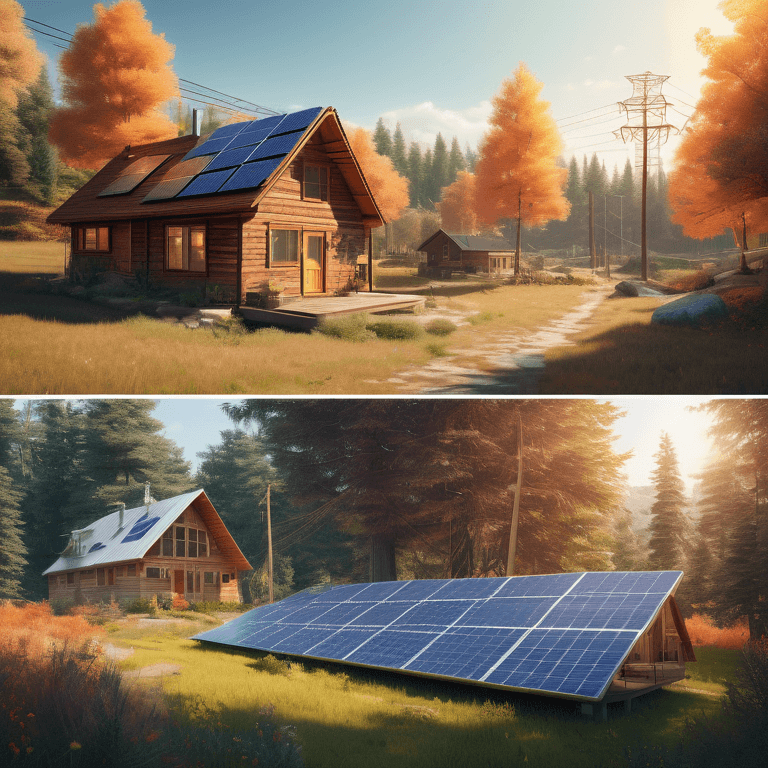

Off Grid vs On Grid Solar Systems Explained
Introduction
As the world shifts towards cleaner and more sustainable energy solutions, solar power has emerged as a frontrunner. Harnessing the sun's energy through photovoltaic (PV) systems offers a compelling alternative to traditional power generation methods. This exploration will navigate the distinctions between two primary solar energy system configurations: off-grid and on-grid. We will break down each system's components, benefits, and drawbacks to better inform your decision-making process.
Understanding Solar Systems: Off-Grid and On-Grid Basics

At their core, both off-grid and on-grid solar systems function by converting sunlight into electricity using solar panels. The key differentiator lies in how this electricity is utilized and distributed. Off-grid systems, as the name suggests, operate autonomously from the utility grid. They generate and store their own electricity, typically relying on battery banks to provide power even when the sun isn't shining.
Conversely, on-grid systems are directly connected to the utility grid. They work in tandem with grid power, allowing homeowners to draw electricity from the grid when solar production is low, such as at night or during periods of heavy cloud cover. This interconnectedness with the grid provides a sense of security and eliminates the need for extensive battery storage in most cases.
Definition and Functionality of Off-Grid Solar Systems
Off-grid solar systems are self-contained power generation and storage units, ideal for locations beyond the reach of traditional utility grids. Imagine a secluded cabin in the woods or a remote research facility; off-grid solar provides a reliable and sustainable energy solution where grid access is limited or non-existent.
These systems achieve energy independence by storing excess electricity generated during sunny periods in battery banks. This stored energy serves as a reserve, ensuring a consistent power supply throughout the day and night, regardless of weather conditions. The level of battery storage required depends on daily energy consumption and the desired level of redundancy to account for extended periods of low sunlight.
The appeal of off-grid systems extends beyond remote areas. For homeowners seeking to minimize their environmental impact and reliance on utility companies, off-grid systems offer a path towards self-sufficiency and reduced energy costs in the long run.
Definition and Functionality of On-Grid Solar Systems
On-grid solar systems, also known as grid-tied systems, represent a popular choice for homeowners seeking to reduce their electricity bills while staying connected to the utility grid. Instead of relying solely on battery storage, on-grid systems seamlessly integrate with grid power, drawing electricity from the grid when solar production falls short of household demand.
One of the significant advantages of on-grid systems is net metering, a billing mechanism offered by many utility companies. Net metering allows homeowners to sell excess solar energy generated by their system back to the grid. This energy offset reduces their electricity bills and, in some cases, can even lead to credits on their account.
On-grid systems simplify solar adoption by eliminating the need for extensive and often costly battery storage. They offer a balance between utilizing clean energy and maintaining the security of grid connection, ensuring a consistent power supply regardless of weather fluctuations.
Key Components of Solar Systems

While both off-grid and on-grid systems harness solar energy, the components required for each vary based on their functionality. Both systems rely on solar panels to capture sunlight and convert it into electricity. However, the differences arise in how this electricity is stored and utilized.
Off-grid systems necessitate battery storage to ensure continuous power availability, given their independence from the grid. On the other hand, on-grid systems interact with the grid, eliminating the need for extensive battery storage and relying on inverters to convert energy for grid compatibility.
Solar Panels: The Heart of the System
Solar panels are the workhorses of any solar energy system. Comprised of photovoltaic cells, these panels capture sunlight and convert it into direct current (DC) electricity. The efficiency of solar panels can vary depending on factors such as cell type, panel size, and manufacturing quality.
When sunlight strikes the solar panel, the photovoltaic cells absorb photons from the light. This absorption excites electrons within the cells, generating an electrical current. The amount of electricity generated by a solar panel is directly proportional to the intensity and duration of sunlight exposure.
The electricity produced by solar panels is then channeled through the solar energy system for immediate use, storage (in the case of off-grid systems), or fed back into the grid (for on-grid systems). The size and number of solar panels required for a home are determined by factors such as energy consumption patterns and geographic location.
Batteries for Off-Grid Systems: Storing Your Sun
Battery storage forms the backbone of off-grid solar systems, enabling energy independence by storing excess electricity generated during the day for use when the sun is down. This stored energy ensures a continuous power supply, making off-grid living feasible.
Batteries come in various types, with lead-acid and lithium-ion batteries being prevalent in solar applications. Lead-acid batteries, while cost-effective, have a shorter lifespan and require more maintenance compared to lithium-ion batteries. Lithium-ion batteries, on the other hand, offer higher energy density, longer lifespan, and require less maintenance, making them a popular choice despite their higher upfront cost.
The size of the battery bank required for an off-grid system is determined by factors such as daily energy consumption, desired backup capacity, and geographical location, as regions with less sunlight require larger battery banks to compensate. Understanding battery storage capacity and discharge rates is crucial for optimizing system performance and effectively managing energy costs.
Inverters: Converting Solar Power for Use
Solar panels generate direct current (DC) electricity, while most household appliances run on alternating current (AC) electricity. Inverters bridge this gap, converting DC electricity from solar panels into usable AC electricity. They are essential components of both on-grid and off-grid solar power systems.
In on-grid systems, inverters convert DC electricity to AC electricity that synchronizes with the grid's frequency and voltage, allowing seamless transfer of energy. They also ensure the safety of the system by shutting down during power outages to prevent backfeeding electricity into the grid, protecting utility workers.
Off-grid inverters, on the other hand, don't need to synchronize with the grid but must provide a stable AC output to power household appliances. They often come with built-in features such as battery charging management and load prioritization, ensuring efficient energy distribution within the off-grid power system.
Grid Connections: How On-Grid Systems Work
On-grid solar systems operate by seamlessly interacting with the utility grid, providing homeowners with access to both solar and grid power. This interconnection offers flexibility and reliability, ensuring a continuous power supply.
When sunlight is abundant, on-grid systems can generate more electricity than a home consumes. This excess solar energy is fed back into the grid, often resulting in credits on the homeowner's electricity bill through net metering agreements with their utility company.
Conversely, during times of low solar production, such as at night or on cloudy days, homeowners can seamlessly draw electricity from the grid, ensuring a consistent power supply. This eliminates the need for extensive battery storage, making on-grid systems a cost-effective option for those with reliable grid access.
Advantages and Disadvantages of Off-Grid Solar Systems
Choosing to disconnect from the utility grid and embrace energy independence through off-grid solar comes with its own set of advantages and disadvantages. The allure of generating and consuming your own electricity, free from utility bills and potential grid instability, is a powerful motivator.
However, this freedom comes at a cost, both financially and in terms of lifestyle adjustments. Weighing the pros and cons of off-grid solar is crucial to determine if it aligns with your energy needs, budget, and commitment to a self-sufficient lifestyle.
Pros of Going Off-Grid
For those seeking the pinnacle of energy autonomy, off-grid solar systems offer the ultimate freedom:
- Energy Independence: Say goodbye to utility bills and reliance on grid power. Off-grid solar empowers you to generate and consume your own electricity, fostering self-sufficiency and resilience against grid outages.
- Environmental Responsibility: By harnessing clean and renewable solar energy, you reduce your carbon footprint and dependence on fossil fuels, contributing to a more sustainable future.
- Ideal for Remote Locations: Off-grid systems are the go-to solution for areas beyond the reach of utility grids, providing reliable power for homes, cabins, or remote work sites.
Living off-grid requires careful energy management and a willingness to adapt to the fluctuations of solar power generation. However, the rewards of self-reliance, environmental stewardship, and long-term cost savings can be incredibly fulfilling.
Cons of Off-Grid Living
While the allure of energy independence is strong, off-grid solar systems have drawbacks that require careful consideration:
- High Initial Costs: Investing in an off-grid system, including solar panels, batteries, inverters, and other components, can be significantly more expensive upfront than a grid-tied system.
- Potential for Power Outages: Extended periods of cloudy weather can deplete battery storage, leading to power outages if the system is not sized to accommodate such scenarios.
- Requires Energy Conservation: Living off-grid necessitates mindful energy consumption habits to avoid overloading the system and depleting battery reserves.
Careful planning, accurate system sizing based on energy consumption patterns, and a willingness to embrace energy-conscious practices are crucial for successful off-grid living. While the transition may require adjustments, the benefits of self-reliance and sustainability can outweigh the challenges for those seeking true energy freedom.
Benefits and Drawbacks of On-Grid Solar Systems
On-grid solar systems, also known as grid-tied systems, offer a more accessible and practical approach to harnessing solar energy for many homeowners. Connecting to the grid provides a safety net, ensuring continuous power availability and potentially reducing electricity bills through net metering.
However, this reliance on the grid also comes with limitations, such as vulnerability to grid outages and the complexities of utility company policies. Examining the benefits and drawbacks of on-grid systems is crucial for making an informed decision aligned with your circumstances and priorities.
Why Choose an On-Grid System?
For homeowners seeking a balance between sustainability and cost savings, on-grid solar systems present a compelling option:
- Lower Upfront Costs: On-grid systems typically cost less to install than off-grid systems, as they do not require extensive battery storage, making solar energy more accessible.
- Net Metering and Bill Savings: Many utility companies offer net metering programs, allowing homeowners to sell excess solar energy back to the grid, reducing or even eliminating their electric bill.
- Grid Backup for Reliability: Being connected to the grid ensures continuous power availability, even during nighttime or periods of low solar production, offering peace of mind and eliminating the need for significant battery storage.
On-grid solar seamlessly integrates with existing infrastructure, simplifying the transition to renewable energy while potentially generating financial benefits through net metering. It represents a practical and accessible path towards a more sustainable lifestyle.
Limitations of On-Grid Systems
While offering numerous benefits, on-grid solar systems come with certain limitations:
- Susceptible to Grid Outages: Your solar power system shuts down during a grid outage for safety reasons, leaving you without electricity until grid power is restored.
- Dependence on the Grid: On-grid systems rely on the grid for power when solar production is insufficient, leaving you vulnerable to fluctuating energy costs and potential grid instability.
- Utility Company Policies: Net metering policies and other incentives can vary depending on your utility company and local regulations, potentially impacting your long-term savings.
Understanding the limitations of on-grid systems is crucial for making informed decisions about your energy needs and backup options. While grid dependence exists, the environmental and financial benefits of utilizing solar energy often outweigh these drawbacks for many homeowners.
Financial Considerations
As with any significant investment, transitioning to solar energy requires careful financial consideration. While solar power offers long-term cost savings and potential environmental benefits, the initial investment can seem daunting. Factors such as system size, panel quality, installation costs, and available incentives or rebates all play a role in determining the overall financial feasibility of going solar.
Evaluating your energy consumption patterns, comparing quotes from reputable solar installers, and exploring financing options can help make solar energy a financially sound investment for your home or business. By weighing the upfront costs against the long-term savings and potential for energy independence, you can determine the best path forward on your solar journey.
Initial Costs and Long-Term Savings
Investing in a solar power system requires significant upfront capital, with costs varying based on system size, panel quality, and installation complexity. However, view this investment as a long-term strategy for substantial energy savings.
Once installed, your solar power system will start generating electricity, reducing your reliance on grid power and lowering your monthly electricity bills. Over time, these energy savings will offset the initial installation costs, providing you with free and clean electricity for years to come.
Furthermore, as electricity rates continue to rise, your solar power system acts as a hedge against these increases, further enhancing your long-term savings. Additionally, many homeowners experience an increase in their property value after installing a solar power system, adding to the overall financial benefits.
Incentives and Rebates for Solar Installation
To encourage the adoption of solar energy, governments and utility companies offer various financial incentives, making solar panel installation more affordable for homeowners. These incentives aim to offset upfront costs, accelerating the return on investment and promoting the transition to renewable energy sources.
The most significant financial incentive at the federal level is the Investment Tax Credit (ITC), which allows you to deduct a percentage of the solar panel installation costs from your federal taxes. Additionally, many states offer their own incentives, such as rebates, performance-based incentives, and property tax exemptions, further reducing the cost of going solar.
Incentive Type Description Federal Tax Credit Allows homeowners to deduct a percentage of installation costs from federal taxes. State Rebates Direct cash rebates offered by certain states based on system size or performance. Performance Incentives Payments based on the amount of solar energy generated by the system over a specific period. Property Tax Exemptions Exemption from property tax assessments on the value added to your home by the solar panel installation. Net Metering Allows homeowners to sell excess solar energy back to the grid, earning credits on their electricity bill.
Consult with reputable solar companies to explore available federal, state, and local incentives to maximize your savings and make the switch to clean energy a financially sound decision.
Environmental Impact and Sustainability
Transitioning to solar energy extends beyond personal economic benefits; it significantly impacts global sustainability by reducing our dependence on fossil fuels and lowering carbon emissions. As climate change concerns escalate, embracing renewable energy sources like solar power becomes crucial for mitigating environmental damage.
Solar energy systems generate clean electricity without emitting harmful greenhouse gases, combating air pollution and reducing our collective carbon footprint. Moreover, solar panels require minimal water usage compared to traditional power plants, contributing to water conservation efforts. By embracing solar power, we contribute to a cleaner, healthier planet for current and future generations.
Reducing Carbon Footprint with Solar Energy
In a world grappling with the urgent need to address climate change, transitioning to renewable energy sources like solar power is paramount for reducing our carbon footprint. Traditional power plants, heavily reliant on fossil fuels, release massive amounts of harmful greenhouse gases into the atmosphere, contributing to global warming and its devastating consequences.
Solar energy, on the other hand, provides a clean and sustainable alternative, generating electricity without emitting greenhouse gases or other pollutants. By harnessing the sun's abundant energy, we can significantly reduce our reliance on fossil fuels, curbing carbon emissions and mitigating the detrimental effects of climate change.
Every kilowatt-hour of electricity generated by solar power displaces the need to burn fossil fuels, contributing to a cleaner and healthier planet. By embracing solar energy, we collectively take a significant step towards a more sustainable future, reducing our impact on the environment and safeguarding the well-being of generations to come.
Longevity and Recyclability of Solar Components
Beyond their operational lifespan, responsible disposal and recycling of solar panels are crucial for minimizing the environmental impact of solar energy. As solar panel adoption surges globally, addressing end-of-life management becomes increasingly important for fostering a circular economy.
Solar panels have a lifespan of 25-30 years, and while advancements in technology are extending their operational life, proper recycling programs are essential for recovering valuable materials like silicon, glass, and metals. These recovered materials can be used to manufacture new solar panels or other products, reducing the need for virgin materials and minimizing waste.
Leading solar panel manufacturers are actively involved in developing efficient recycling processes and collaborating with recycling facilities to ensure responsible disposal. As consumers, understanding recycling options and supporting manufacturers with robust recycling programs contribute to the long-term sustainability of solar energy.
Making the Choice: Which System Fits Your Needs?
Choosing between an off-grid and an on-grid solar system depends on your unique circumstances, priorities, and long-term goals. Careful consideration of factors such as energy consumption, budget, location, and desired level of energy independence is crucial for making the right decision.
Off-grid living offers energy autonomy and resilience against grid outages but demands higher upfront investment and a commitment to energy conservation. On-grid systems, while reliant on the grid, provide a more accessible and cost-effective entry point into solar energy, offering potential savings and environmental benefits.
Assessing Your Energy Needs
Before diving into the intricacies of solar systems, start by analyzing your household's energy consumption patterns. How much energy do you use on average? Are there specific times of day when energy usage spikes? Does your energy usage fluctuate seasonally?
Understanding your energy needs allows for accurate system sizing, ensuring you generate enough power to meet your demands. An undersized system may leave you wanting more, while an oversized system could strain your budget unnecessarily.
Collaborating with a reputable solar installer can be invaluable during this assessment phase. They can analyze your energy bills, discuss your specific needs, and recommend a system size that aligns with your energy usage and future projections.
Considerations for Location and Climate
Your geographical location and climate play a pivotal role in determining the efficiency of your solar system. Factors such as annual sunlight hours, average temperatures, and shading from surrounding structures or trees can impact solar panel output.
Regions with abundant sunshine throughout the year will naturally generate more solar power than areas with frequent cloud cover or shorter daylight hours. Understanding your local climate patterns and analyzing historical solar irradiance data is crucial for optimizing system placement and panel angles.
Solar installers use specialized software and tools to assess your property's solar potential, considering factors like roof orientation, tilt, and shading analysis. This data-driven approach ensures optimal system performance, maximizing your solar energy generation potential.
Conclusion
In conclusion, whether you opt for an off-grid or on-grid solar system depends on various factors like your energy needs, location, and environmental considerations. Off-grid systems offer independence but require careful planning, while on-grid systems provide reliability with grid backup. Understanding the key components, financial implications, and environmental impact is crucial in making the right choice. Whichever system you choose, harnessing solar energy contributes to a sustainable future. Make an informed decision that aligns with your goals for energy efficiency and environmental responsibility.
Frequently Asked Questions
Can I switch from on-grid to off-grid solar system?
Yes, transitioning from on-grid to off-grid is possible. It typically involves adding battery backup and other components to create a hybrid system, allowing a gradual transition. Consider consulting solar kits specialists for system compatibility and installation costs.