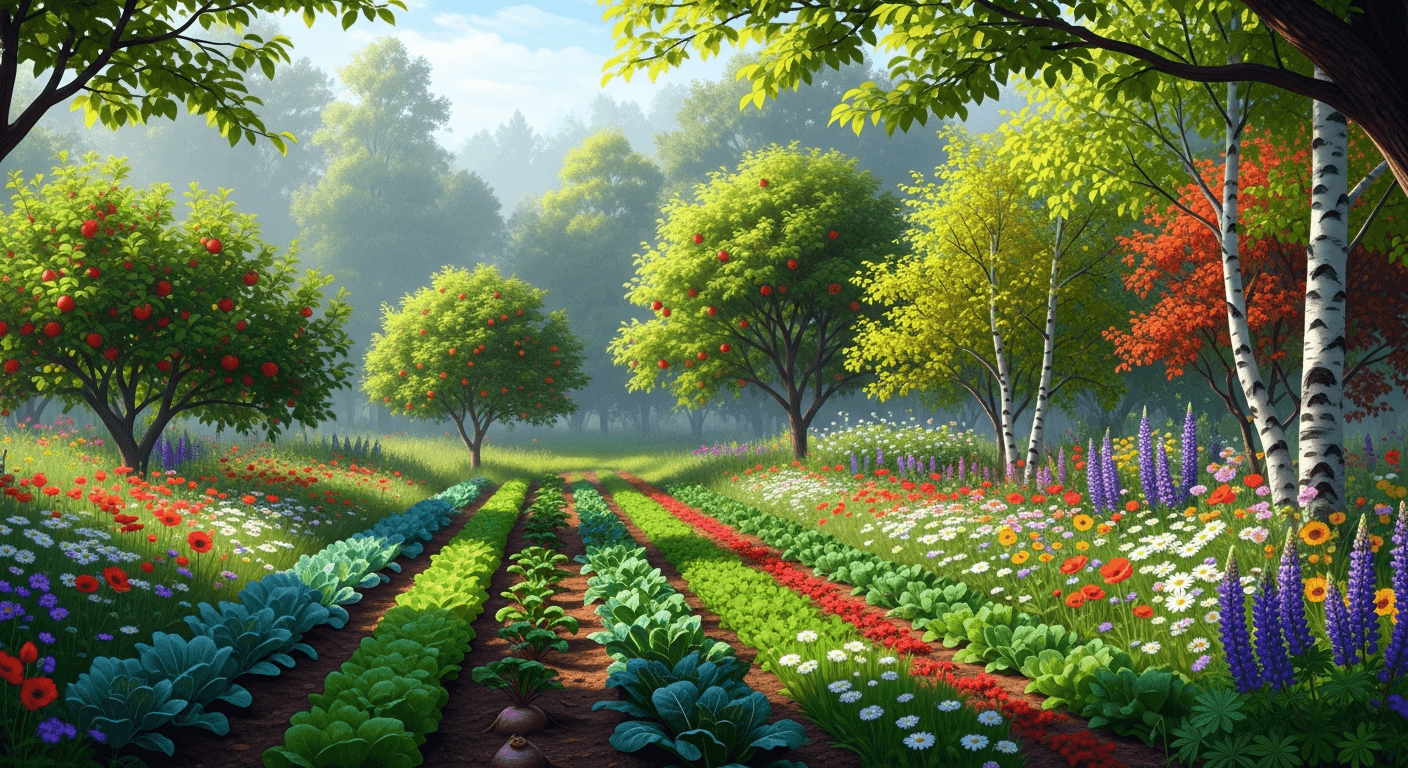

Understanding Forest Farming: A Comprehensive Guide
Introduction
Have you ever thought about growing crops in a forest? The good news is, you can do it. This practice is called forest farming. It is a part of something bigger called agroforestry. In this system, you put together farming and forestry on purpose. You do not have to clear land. Instead, you use the existing forest. You can grow many forest products like medicinal herbs and special foods here. This guide will show you the basics of this practice. It is good for both people and the earth. It can be rewarding as well.
Defining Forest Farming and Its Principles

Forest farming means you grow crops in the shade under trees. This is one of the agricultural practices where the practice of forest farming lets you mix trees with other crops. You build a layered system that lasts a long time. Doing this practice of forest farming helps you get good products while keeping your woods healthy.
A forest farm that is looked after in the right way turns into a place full of life. It can give us many things like tasty mushrooms and roots used for health. In this text, we will talk about what a forest farm really is. We will also look at the main rules that help a forest farm do well.
What Is Forest Farming?
Forest farming is a way to grow top crops under a managed forest canopy. With this method, you do not cut down all the trees to make open fields. You use the existing forest and its ecosystem for your farm. The main goal is to watch and control the shade levels and space. This helps certain plants grow well under the forest canopy.
These forest farming methods are becoming more popular in the United States. They help people earn money from the woods, but still keep the land in good shape. In these methods, you work together with the forest. You grow plants that do well on the forest floor, like some herbs, mushrooms, and decorative things. These plants can grow with little light, so they fit right in.
This way of working builds a system with more than one level. It helps both the farmer and the forest ecosystem. When you work with the land like the forest does, you can grow goods that people want to buy. At the same time, you help save the forest for later years. This is a good way to mix what you make with looking after the forest.
Key Principles of Agroforestry and Forest Management
Agroforestry practices use a planned way of working with land. In these systems, people plant trees, grow crops, and sometimes keep animals together. The goal is to help these parts work as one. The US Forest Service says these agroforestry practices follow the "four I's": they are Intentional, Intensive, Integrated, and Interactive.
Good forest management is key for your success. It is not just about planting crops. You need to take care of the whole woodland. Work on the tree canopy so your forest products get the right amount of shade. This means you may cut some trees or add new ones. Doing this helps your forest stay healthy and keeps it working well for many years.
Key principles to remember include:
-
It is important to keep a healthy tree canopy that can give shade all the time.
-
We should protect how the soil is and also help more types of plants and animals live there.
-
We need to get forest products in a way that lets us keep having them in the future.
How Forest Farming Works in Practice

To practice forest farming, you build a system that works under the forest canopy. A forest farm is not the same as big open fields. Instead, there are groups of plants that grow right on the forest floor. This is called an integrated permaculture approach. You need other tools and ways to do things than with normal farming.
Most of the work in a forest farm is done by hand. People use tools like shovels and rakes instead of big machines for this job. This hands-on way helps keep the soil healthy and safe for all the living things in the woodland. Now, let's talk about how a forest farm is set up and how it fits in with everything around it.
The Structure of a Typical Forest Farm
A forest farm does not look the same as a traditional farm. You can picture a hillside with many tall tree species such as sugar maple, wild cherry, and walnut growing up to make a high roof of leaves. You will not see lines of corn here. A forest farm has understory crops growing in spots on the forest floor or in raised beds that come from the natural soil.
The amount of shade decides how things will be placed. Ginseng likes to be in deep shade, so you will find it planted inside the forest. Black cohosh is not the same; it likes more sunlight to flower. You can see it at the edges of the woods or in small open spots where a tree is missing.
This setup lets you use the different microclimates in your woodland in a good way. When you put each plant in the right spot, you can grow many kinds of crops. This also helps keep the whole forest healthy and strong.
Integration With Native Forest Ecosystems
A big part of forest farming is working closely with the natural forest ecosystem. People mainly grow native plants. These are plants that already do well in the local soil and weather. By using this way, it helps to bring back and grow biodiversity. This means the forest becomes stronger and healthier.
Good forest management means putting native plants that are under threat back where they belong. This helps the environment and also gives people a good crop. By growing these native plants, you help stop too much picking from the wild. You also help keep the plants safe for people in the future. This is good for animals too because it makes the wildlife habitat better.
To effectively integrate your farm, you should:
-
Find and spread the native plants that are already on your land.
-
Keep control of plants that do not belong and take away space from your crops and native plants.
-
Plant with a goal in mind. Pick trees and plants that help the whole ecosystem.
Forest Farming vs. Traditional Agriculture
When you think about a farm, you may see open fields with things like corn or soybeans growing. These are called annual crops because people plant and pick them each year. Forest farming, on the other hand, is very different from this. Instead of clearing away trees, it uses the existing forest to grow plants that live for many years. These plants do not give their harvest right away, and they can take a long time to grow.
These different agricultural practices lead to big changes for the land and for the farmer. Both need people to work the soil. But, the ways, times, and effects on the world around them are not the same. Let's look at these two approaches and see what you need to move over to a forest-based system.
Main Differences in Methods and Outcomes
The main difference between forest farming and field farming is the place where they grow things. Forest farms be under a tree canopy. Field farms are in open, sunny fields. This changes the kind of crops you get, the way you work, and the tools you use. Forest farms mostly grow perennial forest products that like shade. In a field farm, you usually grow annual crops that need a lot of sun.
Forest management is a big part of this practice. You need to keep the tree canopy for shade. This is different from old ways of farming, where people often cut down trees. The time plan is not the same, too. Many forest crops need several years to be ready, but annual crops can be harvested in just one season. This way of working with the land helps people have a strong bond with it.
Feature Forest Farming Traditional Agriculture Land Use Cultivates under an existing forest canopy Clears land for open fields Crops Perennial, shade-tolerant plants (herbs, mushrooms) Annual, sun-loving crops (corn, soy, vegetables) Harvest Time Long-term; crops mature over several years Short-term; crops harvested in a single season Methods Manual labor, minimal tilling, forest management Mechanized labor, tilling, irrigation Inputs Minimal external inputs; relies on natural processes Often relies on fertilizers, herbicides, and irrigation
Transitioning From Conventional to Forest-Based Systems
Moving from regular farming to forest farming practices is a big change, but it can be very rewarding. For people who own land with woods, this is a good way to make money from hilly or wooded spots that you cannot plow. This change means you have to start seeing your forest not as a problem, but as something that can give you value and income.
One common agroforestry practice is called alley cropping. In this method, farmers plant rows of trees. They grow annual crops in the spaces or "alleys" between these rows of trees. Over time, these tree species will get bigger and their leaves will cover more ground. As this happens, you can start to grow more shade-friendly crops under the trees. This helps you move to a more sustainable way of farming while making good use of both tree species and annual crops.
To begin the transition, consider these steps:
-
Look at your woodland to find the best spots and see what native plants are already there.
-
Start with a small patch. Try planting crops that grow well in shade as a test.
-
Make a forest management plan that will help you know what to do in the future.
Crops and Products Grown Using Forest Farming
One exciting thing about forest farming is the wide range of forest products you can grow. This goes beyond just timber. It puts the focus on non-timber forest products, also called NTFPs. These understory crops are grown for food, medicine, decoration, and crafts.
There are many things you can grow on a forest farm. You can grow tasty mushrooms, maple syrup, or even strong medicinal herbs. A place like riparian forest buffers can also be a good space to grow different plants. Let's talk about some of the most popular specialty crops and NTFPs you can try on a forest farm.
Popular Non-Timber Forest Products (NTFPs)
Non-Timber Forest Products, or NTFPs, are at the heart of what a forest farm produces. These forest products do not come from cutting down and selling timber. They come from many kinds of plants and fungi that grow on the forest floor or just under the trees. A lot of these are wild species people can raise and use for a sustainable harvest.
These products are all around us in our daily lives. You will find them in the maple syrup that you put on pancakes and in the vines used to make flowers look nice. Managing these things well lets you help your community and keep the forest ecosystem safe. When you take good care of these resources, you can keep getting these products every year.
Popular NTFPs include:
-
Edibles: You can get maple syrup, ramps (wild leeks), nuts, berries, and some mushrooms you can eat.
-
Medicinals: There are roots, leaves, and fungi that people use in herbal medicine.
-
Decoratives: People use things like branches, bark, and vines for making things look nice.
-
Craft Materials: These are basket-making items, wood for carving, and natural fibers.
-
Planting Stock: You can also get seeds and pieces of roots for forest farmers or to start growing more plants.
Specialty Crops and Medicinal Plants
Forest farming works well when growing valuable specialty crops, especially medicinal plants. There is a big and growing market for medicinal herbs that come from the forest. People now want products that are good for the planet. The Appalachian area is a great place to find these special plants.
Many of these medicinal plants grow year after year and need steady shade to do well. American ginseng is the best-known plant among them, and people value it for its roots. There are also other important crops like goldenseal, black cohosh, and bloodroot. The plants are good for medicine, and they also look nice if you have a shady garden.
Some of the main medicinal plants that people grow on forest farms are:
-
American ginseng (Panax quinquefolius)
-
Black cohosh (Actaea racemosa)
-
Goldenseal (Hydrastis canadensis)
Environmental Benefits of Forest Farming
Forest farming does more than help economy. It gives big benefits for our environment too. When the practice is done in an existing forest, it helps keep the forest safe and healthy. It keeps more types of plants and animals in the area. It helps soil stay in place and also helps with water conservation. All these things work together to keep up the health of the forest.
Forest farming is different from normal farming. It works with nature and helps the land get better. This way of growing things in the forest builds up and supports what the earth already does. Forest farming also helps more kinds of plants and animals live in one place. It keeps the planet healthier. It does this by taking care of the soil and water, too.
Promoting Biodiversity and Wildlife Habitat
Forest farming can help bring back more living things to the area. When you grow native plants in the forest, you give back to the forest ecosystem and help make it stronger. This helps the forest be a good place for many kinds of animals, bugs, birds, and even small living things. It also helps pollinators and other wildlife feel at home in the forests.
The way a forest farm is set up gives a lot of places and food for animals. This helps to make the wildlife habitat better. There are lower bushes that give cover for small animals. Flowers and other plants pull in bees and other helpers. A forest that is healthy and has many types of plants and animals can deal with bugs, sickness, and even the effects of climate change better than others.
Bringing back native plants that might be in danger in the wild is very important. This way of "conservation through cultivation" can help the plants stay alive for years to come. It also makes the forest ecosystem stronger. Your farm will be a home for the plants you grow and for wildlife that need them to live.
Soil Health, Water Management, and Carbon Sequestration
Forest farming practices are very good for keeping soil healthy. With these practices, there is little or no tilling. This means the natural soil stays like it is, and all the living things in it stay too. The tree canopy drops leaves all the time. These leaves work like mulch. They add organic stuff to the soil. They also help keep weeds down and hold in water.
Healthy soil and the forest floor are important for water management. The forest floor works like a sponge. It soaks up rain, cuts down on water running off, and cleans the water before it moves to streams and underground water stores. This helps stop soil from washing away and keeps water clean.
Forest farming is also a good way to help with carbon sequestration. This is how it works:
-
The trees in the forest take in a lot of carbon. They keep this carbon in their wood and roots.
-
The healthy soil that has not been touched also works to keep a lot of carbon in. It is an important carbon sink.
-
When you look after the forest and help it grow, you do your part to fight climate change.
Starting a Forest Farming Operation in the United States
Are you a landowner in the United States who wants to start your own forest farming business? This can be a good way to bring new ideas and extra income to your woods. You need to start with a plan and get to know your land. Learn what makes your spot special and what it can do.
Success comes from good forest management. You need to choose the best mix of tree species and understory crops. Picking the land, and running your forest farm, all need to be done with care. Let's look at the key planning steps. We will also talk about the steps you should take to build a good forest farm.
Site Selection, Planning, and Tree Species Choice
The first thing you need to do when making a forest farm is to choose the right spot and do some careful planning. You have to look at your forest and see if it is good for farming. For this step, you need to check the soil type, how the land slopes, how much sun it gets, and what tree species are there. A clear plan or a map of your land will help a lot at this time.
Choosing the right tree species is very important. When you plant new areas, go for trees that grow in your region. Try to pick ones that are useful, too. For instance, you can use sugar maples for syrup later on. A black walnut tree gives you good wood. These trees make a canopy. The canopy helps your understory crops grow well.
When you want to plan your forest farm, be sure to think about these main things:
-
Site Assessment: Know your land. Look at what is there and see what plants grow on it now.
-
Tree Selection: Pick native trees. Choose the ones that give the right shade and could give you useful things later.
-
Sourcing Planting Stock: Get your seeds and planting stock from places that you can trust and that care about the land.
Steps to Establish and Manage a Productive Forest Farm
After you finish picking your first site and planning it, you can start your forest farm. You need to get the land ready and bring in the crops you want to grow. Most times, setting up a forest farm does not need a lot of work like other types of farms. You mainly clear out plants that should not be there, or you make small changes to the spots where you will plant your crops.
Using good forest farming practices is very important if you want to do well over time. This is something you learn while you do it, so you need to watch how things go and wait. For many crops, you have to try a "wild-simulated" method. This means you plant the crop and then let it grow with little help from you. It will be much like how plants grow in the wild.
Here are the basic steps you need for set up and management:
-
Site Preparation: Clear the forest floor of unwanted plants. Get the planting beds ready for your seeds or planting stock.
-
Planting: Put your seeds or planting stock into the spots you have prepared.
-
Canopy Management: Thin out or plant new trees when needed. This will help get the right shade levels.
-
Pest and Weed Control: Keep pests and weeds away, mostly by using your hands to remove them.
-
Sustainable Harvest: Learn the right way and good time for a sustainable harvest. This will help your crops grow back year after year.
Challenges and Opportunities in Forest Farming
Like any business that deals with farming, forest farming has its own problems and good points. There are many things forest farmers have to face. Perennial crops tend to grow slowly, which can be hard. It is not easy to handle pest control and stop plants that should not be there from taking over. Forest farmers need to be patient and think about the long run when they do this work.
But, there are also many good chances right now. More people want forest products that are made in a way that does not harm nature. There are also new support programs to help landowners do well in this market. Let's talk about the usual problems you may have and the things out there to help you get past them.
Common Obstacles Faced by Forest Farmers
Forest farmers face their own set of problems that are different from those who work in normal farming. One big challenge they deal with is how long it takes for things to grow. A lot of forest crops do not grow fast. They are plants that stay for many years and need time, care, and money before you get any harvest. This means forest farmers must be ready to put in a lot of work and wait a long time before they see the results.
Wildlife can be a problem too. Deer, squirrels, and some other animals might come for the plants you want to grow. In a forest, it is not easy to put up a fence like you would in a big open field. You also have to handle pest control with care so you do not upset the forest ecosystem. It is not just the animals. Invasive plants, like multiflora rose, can keep coming back and be hard to get rid of.
Common obstacles include:
-
Crops grow slow and take a long time to be ready.
-
Wildlife and pests create problems that you have to deal with.
-
You always need to look out for and control invasive plant species.
Resources, Incentives, and Support Programs
You do not have to face the hard parts of forest farming by yourself. There are many resources and support programs out there to help you get started. These groups share important information, give technical help, and offer chances to meet other people.
Institutions like the USDA National Agroforestry Center help move agroforestry practices forward. They do this by sharing research and teaching people. You can find helpful information about things like alley cropping and silvopasture with them. The University of Minnesota and other schools also have programs for people who want to be forest farmers. There are many state and local groups that can help with forest management plans.
Some key resources to explore include:
-
The National Agroforestry Center: This is a main place to get research and info on agroforestry. The national agroforestry center is a trusted source.
-
University Extension Programs: These programs give you useful help, workshops, and answers from people in your area.
-
State Forestry Agencies: They can help you look at forest resources and make plans for how to care for land.
Economic Aspects and Profitability
Beyond helping the environment, there are other good reasons to practice forest farming. One big reason is money. The profitability of forest farming matters to every landowner. It can give you a real way to make extra income. You can do this by selling unique forest products that are in demand right now. Forest farming does take time, but it can pay off well in the long run. You could see good returns if you stick with it.
The need for products that are grown in a safe and green way is getting bigger. This gives people more ways to make money. Let's talk about markets for forest farm products. We can also look at how the profit from forest farm products matches up with what people get from other kinds of farming.
Markets for Forest Farm Products
The markets for forest products are very different from each other. These range from farmers' markets near you to shipping to other countries. In the United States, the total value of medicinal plants that come from forests is over one billion dollars every year. There are more people now who want good quality, sustainable products, and want to know where their forest products come from.
This demand brings new chances for forest farmers. You can sell what you grow right to people at markets. You can also give what you have to local herbalists and restaurants. There is a way to sell big amounts to large industries too. If you make value-added products like jams, tinctures, or oils, you can make even more money.
Potential markets include:
-
Direct-to-Consumer: Farmers' markets, CSAs, and selling online.
-
Wholesale: Selling to restaurants, herbalists, and stores that sell special foods.
-
Industry: Selling raw plants to companies that make herbal medicine or things like makeup.
Comparing Profit Potential With Other Farming Methods
If you want to compare how much money people can make from forest farming and regular farming, you have to think a bit differently. Farming with annual crops often gives back money in only one season. With forest farming, you need to wait longer. It may take several years before you see money from your first investment. But when the forest products grow and reach their full value, they can be worth a lot.
For example, if you grow a mature crop of american ginseng, it can be worth much more per acre than a field of corn or soy. Also, forest farming lets you earn money in many ways. You can sell things like medicinal roots, gourmet mushrooms, decorative items, and even wood products from the same land. This mix of options can help make your business stronger as time goes on.
Aspect Forest Farming Traditional Farming Time to Profit Long-term (3-10+ years) Short-term (1 season) Initial Costs Lower equipment costs, higher planting stock costs High equipment and input costs Product Value High value per unit for specialty crops Lower value per unit for commodity crops Income Streams Multiple products (medicinals, food, crafts, wood) Typically one or two main crops Market Niche, specialty, direct-to-consumer Large-scale commodity markets
The Role of Forest Farming in Conservation and Sustainability
Forest farming is not just a kind of farming. It can help with conservation and help nature last longer. When you grow crops in a sustainable way, you help keep our natural resources safe. This practice lets people use land in a good way, so we work with nature, not against it.
This way of working deals with some of the biggest problems in the world, like land getting worse and climate change. Let's look at how forest farming can help us use land in a way that is better for the Earth. It also plays a part in fighting climate change.
Sustainable Land Use Practices
Forest farming is a big part of using land in a good and lasting way. This way, people who own land can make money from their woods and not hurt them. They do not need to clear-cut the land. With the integrated permaculture approach, growing and taking care of trees go together. People often call this "productive conservation."
This practice helps the land get better over time. You do not use up the things the land gives. You build good soil that can help plants grow. You also help different animals and plants live there. Water stays clean, too. A key idea here is the sustainable harvest of what grows. This means you take things in a way that lets the forest keep giving for many more years. This kind of thinking is what makes it different from many other ways people use land.
If you choose forest farming, you are taking care of your land. You help keep the forest healthy. This is a good way to make sure the forest stays in good shape for the people who come after us. You can leave something good behind for the next generation and help protect nature for years to come.
Contribution to Climate Change Mitigation
Forest farming helps in the fight against climate change. It does this in a direct and big way. Forests are some of the best places for carbon sequestration. This means they take in and store carbon dioxide from the air. By using forest farming, people help keep these important areas strong and healthy. The trees, other plants, and soil there all help take in the carbon dioxide. They work together to lock it away.
If you avoid cutting down trees and help the health of the forest, the forest can better trap carbon. This is very important because it helps fight the rise of carbon in the air. Taking care of the forest also helps water conservation. This makes it stronger when the weather changes, like during times of too little or too much rain.
Forest farming helps with climate change in a few ways:
-
It puts more trees and plants in the land, which take in carbon from the air.
-
These trees and plants help improve the soil and keep it healthy for a long time.
-
People can grow food and other things in the forest, so they do not have to clear more land.
-
The shade and cover from trees can keep the temperature lower, which is good for animals and people.
-
It can also keep water in the ground and stop the soil from washing away.
So, forest farming does a lot to support the planet and the people living on it.
-
We need to keep the forests we have. The forests take in a lot of carbon from the air.
-
It is important to have healthy soil. Healthy soil can hold a lot of carbon.
-
Cutting down on the things that use a lot of energy, which are often used in farm work, can help.
Conclusion
To sum up, forest farming is a good and new way to do farming. It helps keep the land healthy and takes care of the earth. Forest farming mixes crops and trees together. This supports many types of life and makes soil and water better. If you want to start forest farming, know that you get more than just money. You also help the planet and do your part for climate change. When you choose forest farming, you help the land and the people in your area. If you want to learn more, feel free to ask for a free talk to help you begin with forest farming.
Frequently Asked Questions
Is forest farming profitable in the United States?
Yes, forest farming can make good money in the United States. People can grow forest products that are worth a lot, like American ginseng and shiitake mushrooms. It takes time and some money to get started, but there is more need now for special and green goods. This means some people can get a good amount of money from forest farming. To do well, you need good planning and you have to find places to sell these products.
What tree species are best for forest farming?
The best tree species for forest farming are usually native plants. These trees help make a good forest canopy. In the eastern United States, you can find sugar maple, black walnut, and different oaks to be good choices. They can set the right shade levels for important understory crops. These trees can also give their own useful products.
How do I get started with forest farming on my land?
To begin forest farming, first look at your land and pick a good spot. Make a forest management plan. Choose the right tree species and understory crops for your area. Find good planting stock for these plants. It is best to start small and see how everything grows. As you learn, you can make your operation bigger over time.