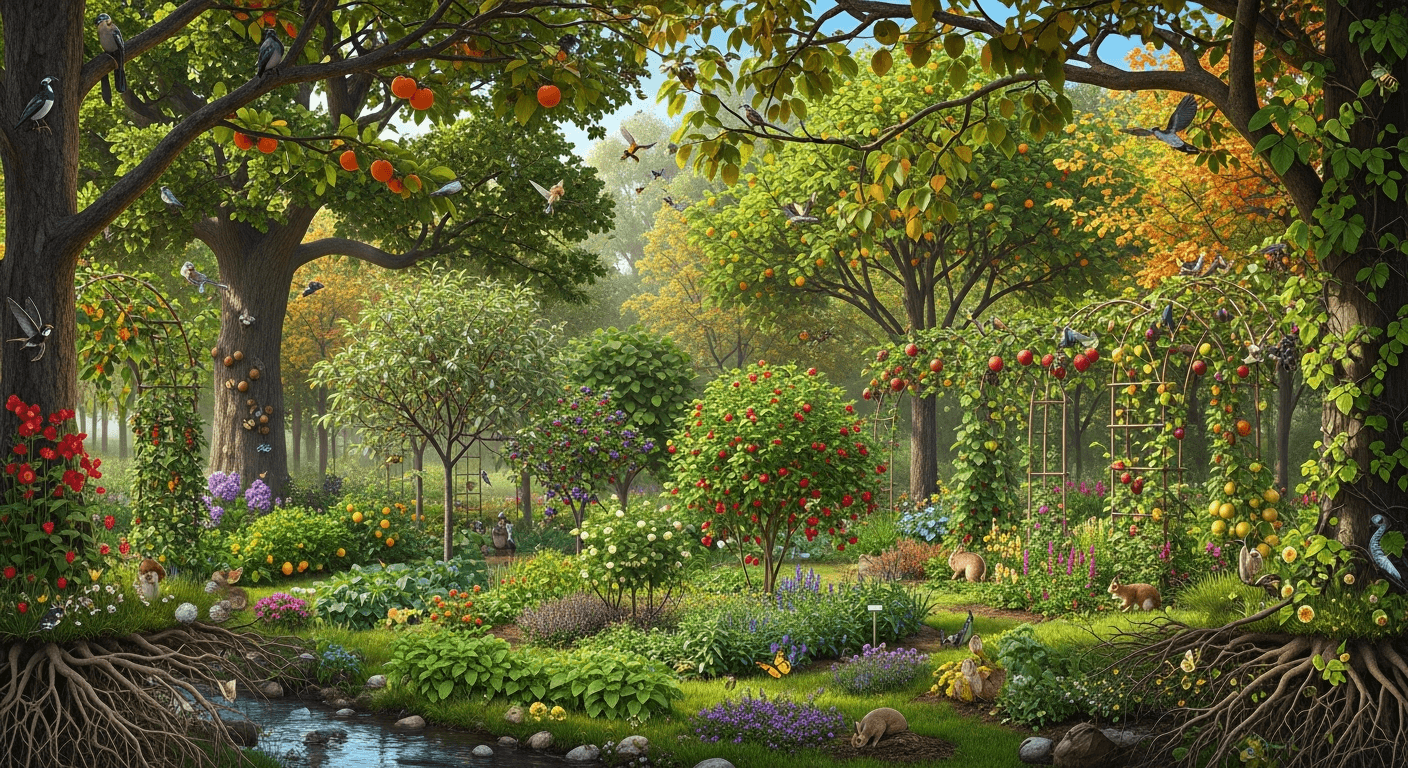

Food Forest Layers: Creating a Diverse Ecosystem
Introduction
Have you ever thought about having a garden that can look after itself and also give you tasty food? A food forest, which people also call a forest garden, can do this. When you use permaculture ideas, you can design a food forest system that works like a real forest. The trees, shrubs, and plants grow together and help each other. This helps make a place that almost keeps itself going with lots of things to eat. A food forest is a good way to grow food, bring in more animals and bugs, and make your yard look nice and feel alive at the same time.
Understanding Food Forest Layers and Their Importance

A food forest is much like a building with several floors. Each floor in this building has its own job. In a food forest, these "floors" are called layers. The layers go from the high canopy layer of trees all the way down to the root layer underground. Every layer has a critical role to play for the rest of the food forest. When you know about these layers, you can put together plant groups, or guilds, that help and support each other.
These layers are important because they work together like a natural forest. The structure makes the best use of space, sunlight, and water. It also helps biodiversity because there are different places for helpful insects and wildlife to live. This makes the garden stronger and helps it give more food or flowers. We will look at why having many layers brings so many good things and see how this system is not the same as a traditional garden.
Why Multiple Layers Create a Thriving Ecosystem
The main reason for having more than one layer in a food forest is to copy how a natural forest grows. This setup helps get more food and makes the space strong against problems. When you stack the plants one over the other, from the tall canopy down to the ground, you can fit more kinds of food in a small area. This idea is one of the key things in permaculture. The goal is to work with nature, not fight it.
This layered setup changes how things work in the area. The layers of a food forest give many places for both plants and animals. This helps a lot with biodiversity. The tall trees give shade and cover for plants that grow under them in the understory. Groundcovers help keep the soil safe from washing away and stop weeds from taking over. All these layers work together to make a home for many animals, including pollinators and other good wildlife. This means your forest garden will be full of life.
A forest garden with many layers is more self-sufficient than a normal garden. The different plants in this kind of garden help each other. They make the soil better, save more water, and deal with bugs in a natural way. Because of this, you don't need as much fertilizer or pesticides. This makes the garden better for you and for all the animals that live in it.
Differences Between Traditional Gardens and Layered Food Forests
A food forest is not the same as most gardens you see. A lot of gardens use neat rows and you plant new crops each year. You have to dig, plant, and take care of them a lot. In these gardens, you often only see one kind of plant at one level. This way, a lot of space above the ground is left empty.
A forest garden is made to last a long time. It has many layers and is set up to keep going without much help. People plant things that grow back every year, so you don't have to do a lot of work. In a forest garden, you won't see plants in lines. They are put together in small groups that help each other.
Here are a few key distinctions:
-
Structure: A traditional garden is flat and has two layers. A forest garden or food forest is made up of three layers. This includes canopy trees, shrubs, herbaceous plants, and groundcovers.
-
Maintenance: A food forest does not need as much work as time goes on. A traditional garden needs you to weed and water it all the time.
-
Plant Types: Food forests use more perennials. A regular garden has many annuals. You have to plant these each year.
The Canopy Layer (Tall-Tree Layer)

The canopy layer is the top part of your food forest. This area has tall trees called canopy trees that make the upper cover or canopy. These trees show what your garden will look like, so you should pick them with care. Where you put each tree will change how much sunlight gets to the plants on the ground. Classic shade trees are often too thick, so they block too much sun. A lot of fruit and nut trees make good canopy trees for this layer.
For this layer, you should look at fruit trees or nut trees. Walnut trees or chestnuts are good examples. These tall trees give us a crop and also shape the canopy for everything below. Next, we will talk about how to pick the best fruit trees or nut trees for your canopy. We will also learn what trees that add nitrogen do for the space.
Choosing Fruit and Nut Trees for the Canopy
When you pick plants for your canopy layer, think about the space you have and what your weather is like. Go for fruit trees and nut trees that can do more than one thing. These trees should let some light pass through, so the lower layers get light too. A tree with an open shape works well for the canopy. Chinese chestnuts are a good choice because they are smaller than the American chestnuts. This will also help your lower layers get more light.
Different kinds of walnut trees, like heartnuts, are great for the top layer of a food forest. You need to be patient because some nut trees may take many years before they start giving you nuts. There are nut pines too, such as Korean nut pine or piñon, that also work well and make good additions to your food forest's canopy.
Here are some sample species for your canopy:
Tree Type Sample Species Notes Fruit Trees Standard Apple, Pear, European Plum Choose varieties suited to your region. Nut Trees Chinese Chestnut, Heartnut, Buartnut Chestnuts work well if pruned for an open shape. Pine Nut Trees Korean Nut Pine, Piñon Pine Overlooked but excellent nut-producing options.
Nitrogen-Fixing Trees and Their Benefits
Using nitrogen-fixing trees in your canopy is a top tip in permaculture. These nitrogen fixers are great for any food forest. The trees and bacteria at the roots work together. They take nitrogen from the air and turn it into something plants can use as food. This way, all of the plants in the food forest get better soil through this process.
These trees do more than just help the soil. Many nitrogen fixers make pretty flowers that bring good insects and pollinators to your garden. They often grow fast, and you can use their trimmed parts to make mulch. This mulch will break down and add more nutrients to the soil.
Some good trees that add nitrogen to the soil are ones you should think about for your design.
-
Black locust: This tree grows fast. It gives great wood and lots of nectar for bees.
-
Silk tree (Mimosa): The silk tree is known for its pretty, sweet-smelling flowers. Hummingbirds love this tree.
-
Mountain mahogany: A smaller, tough tree. It does well in many types of weather.
The Understory and Shrub Layers
Below the tall canopy, there is the understory and the shrub layer. The understory has low trees and small trees that grow well in the shade from the canopy. If your yard is small, these small trees can be the main canopy in your space. The shrub layer is formed by woody plants that are not as tall as trees, like bushes and berry shrubs.
These middle layers are very important in a forest garden. A lot of food grows here. They sit between the tall trees and the ground. This space helps make the forest garden more mixed. It also gives more places for wildlife. Here are some helpful small trees that can grow in the understory. There are also good berry bushes you can plant in the shrub layer.
Selecting Productive Small Trees for the Understory
The understory is great for many kinds of small trees. A lot of fruit trees, like peach, mulberry, and apricot, grow well here. You can get dwarf and semi-dwarf types of bigger fruit trees, such as apple and pear trees. These versions are good if you have a small space or want to plant under larger canopy trees. The understory lets you enjoy fruit trees even near bigger canopy trees.
When you pick your understory trees, try to find ones that stay small or can be kept in an open form with easy pruning. This will let light reach the plants below like shrubs and herbs. You can use shade-tolerant fruit trees for this layer, such as persimmon and pawpaw. They grow well under the larger tree canopy, so they are a good match for your garden understory.
While you cannot usually use timber trees in a backyard food forest because they get too big, you can plant other good trees in the understory. Flowering trees, such as dogwood and mountain ash, look nice and also bring in pollinators. This part of the garden helps your food forest become more useful and beautiful.
Best Berry Bushes for the Shrub Layer
The shrub layer is a great spot to have some fun. You can plant many types of shrubs here. They give you tasty berries that you, your loved ones, and even animals can eat. The shrubs grow between the trees and the ground. So, the shrub layer adds more life and color to the area.
When you pick plants for the shrub layer in your yard, make sure you match them to the spot they will be in. Blueberries need soil that is acidic or they will not grow well. Elderberries do better in ground that is damper. Raspberries, blackberries, and currants are also good choices for this part of the garden. These shrubs will give you fruit, and their flowers also help bring in pollinators.
Here are some great options for the shrub layer:
-
Blueberries: A lot of people like these, but you need soil that is more acidic to grow them well.
-
Hazelnuts: These can get big, but the nuts taste good.
-
Serviceberry: This gives you berries you can eat and pretty flowers in spring.
-
Elaeagnus species: These shrubs add nitrogen to the soil and also give edible fruit.
The Herb, Groundcover, and Vine Layers
As we get closer to the ground, we see the herbaceous layer, groundcover layer, and vine layer. The herbaceous layer has non-woody plants. These plants include vegetables, flowers, and herbs. The groundcover layer is full of short plants that spread over the ground. They help to protect the soil. The vine layer has climbers. These plants grow up trees and trellises. They make use of space that goes up.
These lower layers in the food forest are full of life. There are many food plants here. They help stop weeds, keep the ground wet, and bring in good bugs. We will look at some helpful herbs for your food forest. After that, we will talk about edible ground covers and climbers.
Culinary and Medicinal Herbs in Food Forest 7 Layers
The herbaceous layer is a good spot to grow many types of culinary herbs and medicinal herbs. In this layer, you will often find perennials. These die back when winter comes and grow back again in the spring. Some self-seeding annuals can live here, too. A lot of these plants are helpful in the kitchen. They also bring in good insects and keep away pests.
When you pick herbs for your food forest, think about how much light they need. Some herbs, like mint, do well even in places that do not get a lot of sun. This makes them great for planting under big trees or tall bushes. Other herbs will need to be in sunny, open areas in your food forest. Using different herbs this way is a good permaculture practice, which helps your garden have more uses and feel full of life.
Here are some of the herbs that people like to grow in the herbaceous layer:
-
Chives: The flowers from chives are loved by bumblebees and other pollinators.
-
Mint: Mint grows fast and spreads a lot. It does well in wet and shady spots. Make sure to plant mint where you are able to control its growth.
-
Asparagus: Asparagus is a vegetable that comes back every year. It will give you food for many years.
Edible Groundcovers and Climbers for Diverse Layers of Food Forest
The groundcover layer is a key part of a healthy food forest. These ground covers grow low to the ground and spread out. They keep the soil safe from being washed away and help hold in water. The ground covers also help stop weeds from taking over. Some of them even give us food! Strawberries are a well-known edible groundcover. They make sweet fruit and at the same time, they cover the ground. Sorrel also works well as a ground cover. It gives you tangy leaves that you can add to salads.
The vine layer, also called climbers, can make your garden look more interesting by growing up high. These plants can climb tree trunks, fences, or trellises. Growing them this way helps you use all of your space. Some climbers are food plants like grapes, kiwifruit, and passionflower. There are also ones that only grow for one year, like cucumbers and some types of squash. You can show these climbers how to grow up instead of out.
When you pick ground covers and climbers, keep in mind that they are here to fill empty spots in your garden. Some ground covers like clover help add nitrogen to soil, which is good for other plants. There are vines that come back every year, but some can spread a lot and be hard to keep under control. You have to watch these so they do not take over space from other plants.
The Root and Mycelium Layers
At the end, we look under the ground to see the root layer and the mycelium layer. The root layer is also called the rhizosphere. This is the place where root crops grow. You can find another harvest here, but be careful not to dig up the roots of other plants that stay year after year. Healthy soils help this part grow well.
The mycelium, also called the fungal layer, is made of fungi in the soil. This network is good for the land to be healthy and helps plants grow. Fungi live with plant roots and help them get more water and good things from the soil. If you use root crops, they can do well with help from the fungal layer. Let's see which root crops are best for your garden and how the fungi can help you get more out of it.
Root Crops That Support Soil Health
The root layer, also known as the rhizosphere, brings a new way to get food from your food forest. For root crops, try to pick ones with shallow roots or ones you can take out easily. This way, you do not hurt other plants around them. Garlic and onions are both good choices for the root layer. They do not need you to dig deep into the ground.
Potatoes and Jerusalem artichokes can also grow well in the root layer of a food forest. While digging them up may disturb the soil a bit, they are quite easy to take out. Deep-rooted crops like carrots can be harder to grow in an established food forest. This is because carrots have to share the soil with the roots of other plants that stay for years. In permaculture, it is important to think about the root layer and try to keep the soil from being disturbed too much.
You can also use some root crops to help make the soil better. When you plant daikon radish and leave it in the ground, its big root will break down after some time. This adds important stuff into the soil and makes new paths for water and air. This practice helps with soil structure and gives more nutrients to the soil. It helps all the plants grow well and stay healthy in the system.
Fungi and Mycelium for Enhanced Productivity
The fungal layer is a key part of a healthy food forest. Fungi grow in the soil and all over the forest floor. There is a network of mycelium here. These are thin threads made by fungi. The fungi work closely with plant roots. This is called mycorrhiza. The plant and fungi help each other in this relationship. Because of them, plants can take up water and nutrients much better.
A healthy fungal layer is very important in permaculture. It helps make a strong natural system that does not need a lot of outside fertilizers. The mycelium in the ground works like a network, and it can even move things between plants. This web under the soil is one reason why a forest stays strong and looks after itself.
You can encourage a healthy fungal layer by:
-
Adding organic matter: If you put wood chips and leaves on top of the soil, the fungi will have food to grow.
-
Minimizing soil disturbance: If you till the soil, it breaks the thin threads that the fungi make.
-
Inoculating with mycelium: You can put good fungi in your soil to help them start growing faster.
How to Apply Food Forest Layering in Your Backyard
You do not need a lot of land to make a food forest. The idea behind food forest layering works for small spaces too. A smaller forest garden can fit in almost any backyard. With permaculture ideas, gardeners can make it both full of life and full of plants to eat. The trick is to pick plants that will do well in the space you have.
A food forest in your backyard can have a dwarf fruit tree as the canopy. You can plant berry bushes, herbs, and groundcovers under it. Even a small area can turn into a busy place with many layers. Next, we will talk about how you can change these layers for city spaces and what mistakes you should avoid.
Adapting Layers of Food Forest to Urban Spaces
Yes, you can set up food forest layers in small urban gardens, patios, or even on a balcony. A smaller forest garden in the city is possible if you pick the right plants. Try using dwarf trees instead of large ones. You can also use plants that will grow well in pots or other containers.
For towns or cities, you can use a large pot and plant a dwarf fruit tree to make the main canopy. Under the tree, put in smaller shrubs. A blueberry bush, some herbs, and a groundcover layer like strawberries work well here. You can also use vertical gardening tricks. These help you grow vines that can climb up walls or trellises.
Here are some tips to help you use layers in city areas:
-
Choose dwarf varieties: Pick dwarf fruit trees and small berry bushes.
-
Utilize containers: You can grow almost any plant in a big enough container.
-
Think vertically: Grow climbers like peas, beans, or passionflower to get the most out of your space.
Making better choices for food forest setups in smaller areas lets you enjoy fruit trees and climbers, no matter where you live.
Common Challenges and Mistakes to Avoid
When you start a food forest, you can make some usual mistakes. A big one is putting canopy trees too close to each other. At first, they look small. But these canopy trees will grow, and soon, they will take up a large area. If there are too many in one spot, they will block plenty of light from getting to the lower layers. When that happens, your understory plants cannot grow well.
Another thing people find hard is impatience. A food forest needs time to grow and does not happen right away. It can feel easy to want to plant everything at the start, but it is often best to begin with bigger trees. Later, you can add more layers as the system grows. A good garden needs you to watch how things go and to wait.
To avoid these pitfalls, remember the following:
-
Plan for mature sizes: It is good to check how big the trees and shrubs in your food forest will be when grown. Do this before you plant them.
-
Don't overcrowd: Make sure the plants are not too close. This gives them space to grow and allows the lower layers to get sunlight.
-
Start small: You do not need to plant every layer in your food forest right away. Begin with the canopy, then add more layers over time.
Plant Selection Strategies for Every Layer
Choosing the right plants is key for a good food forest. You want plants that give food and help each other grow so the land stays healthy. A permaculture method means picking plants that are from your area or can do well in your climate and soil. This helps your food forest work well and be strong.
From the tallest trees to the groundcover layer, every choice you make is important. Think about what each plant does. Does it add nitrogen to the soil? Does it bring in pollinators? Can it give mulch? Next, we will see how to pick plants that fit your place and talk about why using native species is good.
Matching Plants to Sunlight, Water, and Space Requirements
To choose the right plants, first take time to watch your garden. Look at how the sunlight falls at different times of the day. See where water stays after it rains and think about how much room you have to grow things. There may be spots that get full sun all day, and these are great for plants that need a lot of sun. Other areas may stay in the shade because of a big tree. Knowing this will help you pick what to plant in each space.
Once you know your site, you can pick plants that will do well there. For example, it is not a good idea to put a tomato plant that loves sun in a spot with lots of shade. It is better to use a herb or groundcover that likes shade. In the same way, put plants that need a lot of water in wet parts of the garden. Plants that do not need much water should go in dry parts.
Here are some tips you can use to help match plants to what your place needs:
-
Map your sunlight: Look at the spots in your garden at different times of the day and year. Write down which spots get sun and which are in the shade.
-
Assess your soil: Check your soil for how wet it gets and what it is made of. This can help you pick the right plants to put in the ground.
-
Consider mature size: Think about how big the plant will get when it is fully grown. A good plan helps you avoid putting plants too close together. This saves you trouble later and helps your garden stay healthy.
Native and Adaptable Plant Choices for the United States
Using native plants in your food forest system is a good idea. The plants already know how to grow in your area. They fit the climate, soil, and pests where you live. Because of that, they do not need much care to grow well. Native plants give the best food for local wildlife. These include pollinators and birds. They also help more types of plants and animals live in your garden. This is how they support the food forest and add to its biodiversity.
Across the United States, there are many native plants you can pick for eating or other uses. You can use native oaks or nut pines in the canopy. Some good options for the understory are pawpaws and serviceberries. There are also a lot of plants that are not native but can grow well in your area. Just make sure that these plants are not invasive where you live.
When you pick plants, try not to choose very thick trees like beech. These trees can block too much sunlight. Watch out for plants like bamboo too. This kind of plant can spread fast and may soon cover your whole garden. If you want help with plant choices, your local extension office or native plant society has good tips for your area.
Ecological Benefits of Food Forest 7 Layers
The food forest has many good things for the environment. A food forest is set up to copy how nature works. The 7 layers in the food forest join to help keep the space strong and can keep going on its own. With permaculture, the work is about more than to grow food. It also helps fix the land and supports life where you live. This is done by letting more kinds of plants and animals live there and by making healthy soils.
A food forest can help cut down the need for fossil fuels and chemicals that people often use in big farming. It gives animals a place to live. The plants and soil save water. A food forest also stores carbon, which is good for the air and the earth. Let's see how it helps animals and makes soil and water systems strong.
Supporting Biodiversity and Wildlife
A forest garden is a great place for all kinds of wildlife. The way the trees, shrubs, and other plants grow together helps make many homes for animals. This brings more types of life to your garden. The flowers from fruit trees, shrubs, and herbs bring in many pollinators, like bees and butterflies. These pollinators help the plants grow more fruit and keep your garden alive with movement.
The food plants that you grow do more than just feed you. They also give food to birds, small animals, and helpful insects. Berries, nuts, and seeds are very important. They can be a good food source for wildlife, especially in cities where there is not much food around. When leaves and branches fall, they give insects and amphibians a place to stay.
When you grow many types of plants, you help build a strong food web. This brings in good insects that eat pests, so you do not have to use many chemicals. Your forest garden is like a living system, where you and the nature around you work together. You help nature, and it helps you in return.
Building Resilient Soil and Water Systems
One of the good things about a food forest is that it helps to build healthy soils. It also makes water systems stronger. In normal gardening, people often leave soil uncovered. This makes soil wash away and water dry up. A food forest keeps the soil covered all year because of its many layers of plants.
Leaves, twigs, and other plant parts fall on the ground all the time. These things build up and form a thick layer called mulch on top of the soil. The mulch helps keep the soil safe. It stops water from leaving the soil too fast, and it breaks down slowly to make good, rich humus in the dirt. This makes the soil feel soft and like a sponge, so it can hold a lot of water. It is like having a little water tank in the garden, which helps the plants when there is not much rain.
The deep roots of trees and the use of nitrogen-fixing plants, such as clover, help to make the soil stronger and better. With permaculture, you do not have to till the soil, so the important life in the soil stays safe. This makes the soil full of life and healthy. Plants can grow strong, and your garden will not break down easily.
Conclusion
To sum up, making a food forest with many layers helps build a lively place for plants and animals. It boosts both sustainability and biodiversity. Every layer, starting at the top with the canopy and moving down to the mycelium, helps improve soil and brings in more wildlife. When you know what each layer does and pick the right plants, you can grow a space that is good for you and for nature. Using this way in your own yard can turn it into a beautiful and healthy spot. If you want to begin your food forest or want advice, feel free to get in touch for a free consultation!
Frequently Asked Questions
Can food forest layers be customized beyond the 7-layer model?
Yes, for sure! The seven-layer model is just a guide for a food forest. It is not something you have to follow exactly. Some people add an eighth layer for fungi while some may put layers together in small gardens. You can set up the food forest layers to match your space, your weather, and what you want. This is true for all layers, from the canopy layer all the way down to the root layer.
What is the main purpose of having different layers in a food forest?
The main reason for having several layers in a food forest is to copy how a natural woodland grows. This helps you make the best use of space, sunlight, and water. When you stack plants on top of each other, you get more from the land and there will be more types of life. This makes the garden stronger and more able to look after itself. You also end up doing less work to keep it going, as time goes on. This is a great way to build up food forest biodiversity.
How do I choose plants for each layer when starting out?
To pick plants for each layer, look at your site's sun, water, and soil. Start with large canopy trees that fit the space you have. After that, add shrubs, herbs, and ground covers to fill the lower layers. Make sure the plants you choose for the lower layers work well in your climate and grow well together.