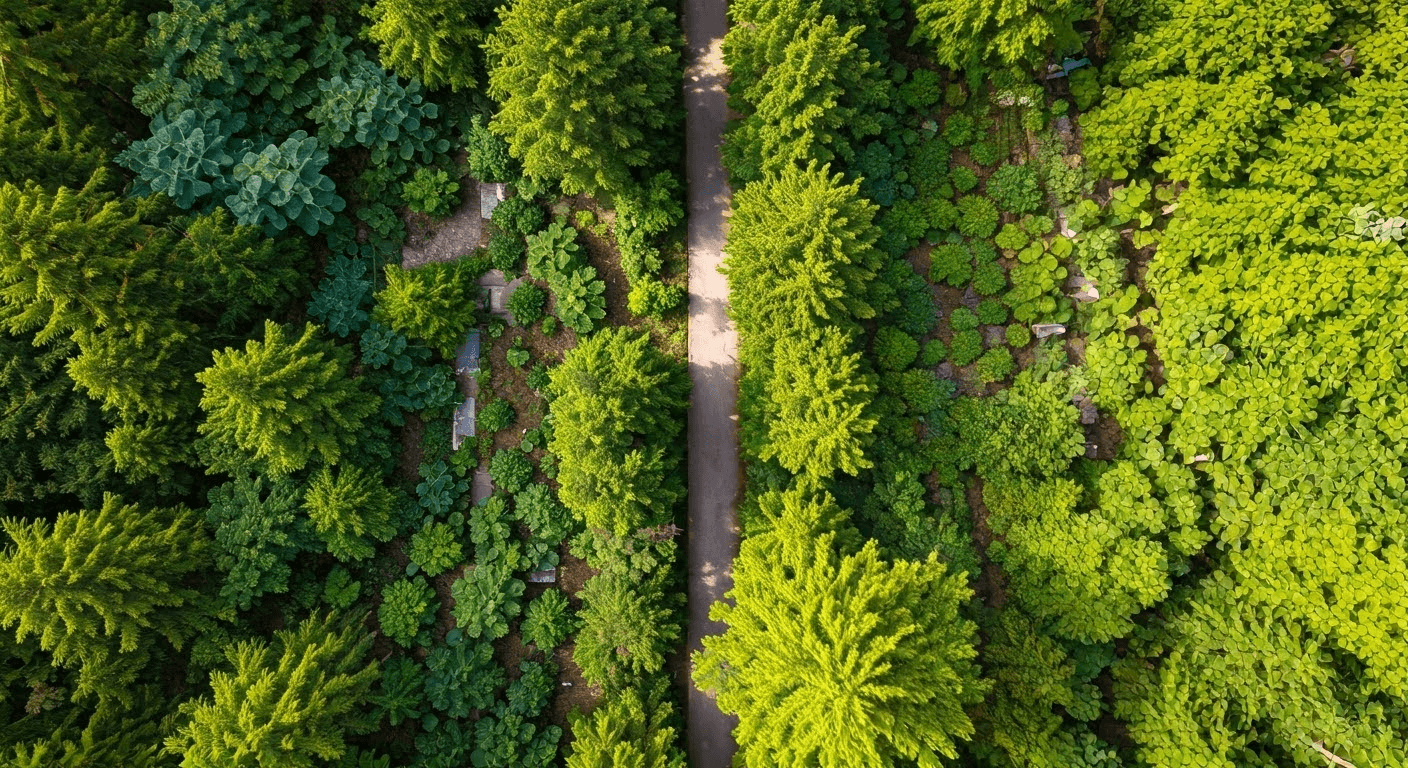

Beginner's Guide to Food Forest Design: Step-by-Step Tips
Introduction
Imagine stepping into your backyard and finding yourself surrounded by a thriving woodland brimming with edible plants. This is the essence of a food forest, a gardening technique rooted in permaculture design principles. This approach creates a self-sustaining ecosystem where fruit trees, shrubs, herbs, and vegetables coexist harmoniously, providing a bountiful harvest with minimal effort in the long run.
Understanding Food Forests: A Primer

A food forest operates on the ecological principles of a natural forest ecosystem. Just like its wild counterpart, it comprises multiple layers of vegetation. This vertical arrangement allows for efficient utilization of sunlight, mimicking the way plants naturally grow in a forest.
You'll find a diverse range of food forest plants, including fruit and nut trees forming the canopy, shrubs in the understory, and a lower layer of herbs, vegetables, and ground covers. Each plant plays a crucial role, contributing to the overall health and productivity of the ecosystem.
Defining a Food Forest
A food forest, also called a forest garden or edible forest garden, goes beyond a simple fruit orchard. It's a carefully planned ecosystem designed to maximize productivity and sustainability. At its core lies the understanding of how different plants interact and benefit each other.
The concept of layers is fundamental to a food forest's design. Starting with the canopy layer, typically comprised of tall fruit or nut trees, each layer downward plays a specific role in the system. Beneath the canopy, you'll find the understory, filled with smaller fruit trees, shrubs, and nitrogen-fixing plants.
Further down, a rich tapestry of herbs, perennial vegetables, and ground covers blankets the forest floor, creating a diverse and resilient ecosystem. Each layer contributes to the overall health, productivity, and resilience of the food forest.
The Ecological Principles Behind Food Forests
Food forests embody the principles of permaculture, a design system emphasizing harmonious integration with nature. Biodiversity, or the variety of life within a system, plays a crucial role in the health and resilience of a food forest. By incorporating a diverse range of plants, you create a balanced ecosystem that is naturally resistant to pests and diseases.
Soil quality is paramount to a food forest's success. Permaculture emphasizes building healthy soil through mulching, composting, and minimizing soil disturbance. Healthy soil supports a thriving ecosystem of beneficial microbes, fungi, and insects, all contributing to the decomposition of organic matter.
This decomposition releases nutrients back into the soil, naturally fertilizing your plants. A well-established food forest requires minimal external inputs, relying on natural processes to sustain itself.
The Benefits of Creating Your Own Food Forest

Creating a food forest in your backyard offers a multitude of benefits beyond just the bounty of fresh food. As you nurture this self-sustaining ecosystem, you'll also enhance your local biodiversity, attract beneficial insects, and contribute to a healthier environment.
Furthermore, a food forest promotes excellent soil quality through natural processes. The decomposition of organic matter from fallen leaves, pruned branches, and decaying wood creates a natural fertilizer, reducing or eliminating the need for synthetic fertilizers.
Enhancing Biodiversity in Your Backyard
One of the significant advantages of a food forest is its ability to transform your backyard into a haven for biodiversity. Selecting a mix of food forest plants, particularly native species, creates a habitat that attracts various beneficial insects. These include pollinators like bees and butterflies, and predatory insects like ladybugs and lacewings that naturally control pests.
In addition to attracting beneficial insects, a diverse food forest provides shelter and food for birds, small mammals, and other wildlife. This creates a thriving ecosystem that contributes to the overall health of your garden and the surrounding environment.
Choosing native plants whenever possible further enhances the ecological value of your food forest. These plants have co-evolved with local insects, birds, and other wildlife. This provides them with the food and shelter they need to thrive.
Planning Your Food Forest: The Preliminary Steps
Before you start digging, it's essential to plan your food forest carefully. This begins with assessing your site and understanding its unique characteristics, such as sunlight exposure, soil type, and water availability. Permaculture design emphasizes working with your land's natural contours and microclimates rather than against them.
Once you have a clear understanding of your site, you can start planning the different plant layers. Researching what grows well in your climate and considering the mature size of each species will help you make informed decisions.
Assessing Your Space and Soil Conditions
The success of your food forest hinges on healthy soil. Begin by assessing your soil's texture, drainage, and nutrient content. Ideally, you want loose, well-draining soil rich in organic matter. If your soil is compacted, amending it with compost, aged manure, or leaf mold is crucial.
Sheet mulching is a highly effective method for improving soil quality, especially when transitioning a lawn into a food forest. This technique involves layering cardboard or newspaper on the grass, followed by layers of organic materials such as straw, leaves, and wood chips.
Sheet mulching suppresses weeds, retains soil moisture, and encourages beneficial microbial activity, ultimately enriching your soil over time. It provides an excellent environment for new food forest plants to thrive.
Choosing the Right Location for Each Plant Layer
The beauty of a food forest lies in its vertical structure, maximizing sunlight utilization. The tallest trees, forming the canopy layer, typically require six or more hours of direct sunlight. Beneath the canopy, the shrub layer, consisting of smaller fruit trees and nitrogen-fixing shrubs, thrives in partial shade.
Finally, the ground cover layer, comprising herbs, creeping vegetables, and flowers, prefers dappled sunlight or shade. Consider the mature size of each plant when determining their ideal locations. This prevents overcrowding and competition for resources as the forest matures.
Remember, a successful food forest mimics the natural layering of a forest, with each plant playing a specific role. By researching the sunlight requirements of each species and their compatibility with neighboring plants, you ensure long-term health and productivity.
Gathering the Essentials: What You Need to Start
As you embark on your food forest adventure, gathering the necessary tools and sourcing plants are crucial steps. These preparations may seem daunting, but having the right equipment and carefully selecting your plant palette will set the foundation for a thriving food forest.
Before you head to the nursery, take inventory of your essential tools, including a shovel, a spade, pruning shears, and a wheelbarrow. These basic tools will assist you throughout the planting process and beyond as you maintain your food forest.
Essential Tools and Materials for Building a Food Forest
Building a food forest requires a few essential tools to ensure the smooth planting and maintenance of your edible paradise. Aside from the usual suspects like a sturdy shovel, a hand trowel, and pruning shears, having a good pair of gloves and a wide-brimmed hat can make a significant difference in your comfort.
Mulch plays a crucial role in a food forest, suppressing weeds, retaining soil moisture, adding organic matter, and moderating soil temperature. Having a source of mulch ready for application after planting is vital. Consider sourcing wood chips from a local arborist or using readily available materials like straw, shredded leaves, or compost.
Additionally, investing in a quality hose and watering wand is essential, especially in the early years of establishing your food forest. Proper watering encourages robust root systems and sets the stage for healthy plant growth.
Sourcing Plants and Seeds for Your Food Forest
Sourcing plants and seeds for your food forest is an exciting step. Start by researching nurseries that specialize in edible plants, particularly those offering a wide selection of fruit trees, berry bushes, and perennial vegetables. Consider adding nitrogen-fixing trees and shrubs, enriching the soil naturally.
When choosing fruit trees, opt for disease-resistant varieties well-suited to your climate. Consider factors like pollination requirements, fruit ripening times, and growth habits to create a diverse and productive orchard.
Don't forget the lower layers! Include a variety of herbs, both culinary and medicinal, to attract pollinators, deter pests, and enhance biodiversity.
Step-by-Step Guide to Creating Your Food Forest
Now that you've planned your food forest and gathered your tools and plants, the excitement of transforming your vision into reality begins. Follow these steps, keeping permaculture design principles in mind, to establish a thriving and abundant food forest. Remember to plant in layers, starting with the largest species and working your way down.
This step-by-step guide will provide you with a roadmap to success, ensuring your food forest not only provides delicious food but also enhances your local ecosystem.
Step 1: Soil Preparation and Mulching
Before introducing any plants, prioritize soil preparation. Clear the area of existing vegetation, rocks, and debris. Incorporate a generous layer of organic matter, such as compost or well-rotted manure, into the top 6-12 inches of soil.
Once your soil is amended, spread a thick layer of mulch, about 3-4 inches deep, around the planting area, leaving a small circle, about 6 inches in diameter, around the base of each plant. Mulch acts as a protective blanket, suppressing weeds, regulating soil temperature, and retaining moisture.
As the mulch decomposes, it continues to improve soil structure and fertility. Choose organic mulches like wood chips, shredded leaves, or straw to enhance your food forest's ecosystem.
Step 2: Planting the Canopy Layer
Begin by planting your tallest trees, forming the canopy layer. Choose a location with ample sunlight and consider their mature size to avoid overcrowding. Dig a hole twice the width of the root ball and just as deep, ensuring the tree sits at the same level as it was in the container.
Gently loosen the roots before placing the tree in the hole. Backfill with soil, tamping it down lightly to eliminate air pockets. Water deeply after planting. Stake your trees, especially if they are tall or in a windy location. This provides support and helps them establish strong root systems.
Step 3: Adding Understory Trees and Shrubs
With the canopy layer established, move on to the understory, planting smaller fruit trees, shrubs, and nitrogen-fixing plants. Position these species according to their sunlight requirements, considering the shade patterns created by the taller trees.
Remember, diversity is key. Choose a mix of trees and shrubs that offer different fruits, nuts, or berries, extending the harvest season and providing diverse food sources.
Space the plants appropriately, leaving enough room for their mature size. This typically involves spacing shrubs about 3-5 feet apart and smaller trees about 10-15 feet apart, depending on the specific species.
Step 4: Incorporating the Herbaceous Layer
The herbaceous layer adds culinary delights and visual appeal to your food forest. Choose a variety of perennial vegetables, culinary herbs, and edible flowers. Consider planting companions, grouping plants that benefit each other, such as basil repelling pests from tomatoes or chives deterring aphids.
Spacing depends on the plant's mature size. Leave adequate space for air circulation, reducing the risk of fungal diseases. Remember to choose plants suitable for your climate and growing conditions.
Step 5: Ground Cover, Vines, and Root Crops
Fill in the gaps with a diversity of ground cover plants, vines, and root crops, creating a living mulch that suppresses weeds, retains moisture, and adds nutrients to the soil. Low-growing strawberries, creeping thyme, and clovers are excellent choices for a lush ground cover.
Consider incorporating climbing vines like grapes, kiwi, or passionfruit. They efficiently utilize vertical space and add visual interest. Don't forget root crops like potatoes, sweet potatoes, and Jerusalem artichokes, which thrive in the dappled shade beneath the taller layers.
When selecting your ground cover, vines, and root crops, prioritize diversity. Different species attract various beneficial insects and contribute to a more resilient and productive food forest.
Maintaining Your Food Forest
While a food forest requires less maintenance than a traditional garden, it still benefits from regular care to thrive. Watering, especially in the early years after planting, is crucial for establishing strong root systems. Regularly check the soil moisture and water deeply rather than frequently.
Observe your plants for signs of pests and diseases, addressing them promptly to prevent widespread issues. Mulching, attracting beneficial insects, and promoting good air circulation through proper plant spacing contribute to a healthier and more resilient food forest.
Watering and Mulching Techniques
During the first few years after planting, regular watering is crucial to support the establishment of your food forest. Once established, the deep root systems of trees and shrubs make them more resilient to drought. However, providing supplemental irrigation during extended dry periods is still beneficial.
Mulch plays a vital role in maintaining optimal soil moisture, significantly reducing the need for frequent watering. Apply a thick layer of mulch, around 3-4 inches deep, around the base of plants, avoiding direct contact with the trunks.
Regularly check the soil moisture by digging your fingers a few inches deep into the soil. Water when the soil feels dry to the touch. Aim for deep, infrequent watering, which encourages roots to grow deeper into the soil.
Managing Pests and Diseases Naturally
One of the joys of a food forest is its ability to self-regulate, minimizing the need for synthetic pesticides. By fostering a diverse ecosystem, you attract a variety of beneficial insects that naturally control pests. Plant a variety of flowering herbs and allow some areas to grow wild, providing habitat and food sources for these beneficial creatures.
Encourage birds to visit your food forest by providing nesting boxes, bird feeders, and a water source. Birds devour countless insects, including many common garden pests. Practicing good sanitation, such as removing fallen fruit and pruning diseased branches, helps prevent the spread of diseases.
Conclusion
In conclusion, embarking on the journey of creating a food forest is not just about cultivating plants; it's about nurturing an ecosystem that thrives sustainably. By understanding the ecological principles behind food forests and meticulously planning each plant layer, you can enhance biodiversity right in your backyard. The step-by-step process of preparation, planting, and maintenance ensures the long-term success of your food forest. Embrace this endeavor with patience and dedication, and you'll soon reap the rewards of a flourishing and self-sustaining edible landscape that benefits both you and the environment. Happy gardening!
Frequently Asked Questions
How long does it take for a food forest to mature?
A food forest's maturation time varies, typically taking several years to reach its full potential. Patience is key! It may take 3-5 years for fruit trees to bear significant yields and 5-10 years for the entire food forest to establish its layers and reach a mature state.
Can I create a food forest in a small backyard?
Absolutely! You can create a mini food forest even in a small backyard or urban area. Choose dwarf varieties of fruit trees, utilize vertical space with trellises, and focus on compact, high-yielding plants to maximize your space.
What are the best plants to start with for a beginner?
For beginners, starting with resilient, easy-to-grow plants is recommended. Consider berries like blueberries or raspberries, nitrogen-fixing shrubs like Siberian pea shrub, and fast-growing herbs like thyme, oregano, and mint.
How do I control weeds in my food forest without chemicals?
Mulch is your best friend for weed control in a food forest. A thick layer of mulch suppresses weeds, preventing them from gaining a foothold. Planting a diverse ground cover layer also helps outcompete weeds.
Can a food forest survive in cold climates?
Yes, you can create a thriving food forest even in cold climates! Choose cold-hardy plants, utilize microclimates, and research protective measures like winter mulching to shield your plants from harsh temperatures.