How to Effectively Design Regenerative Agriculture Systems
Introduction
People around the world are worried about climate change and the need to keep food supplies strong. Because of this, regenerative agriculture is getting more notice. This kind of farming uses a holistic approach. It helps the environment instead of making it worse.
Regenerative design is very important for how we do farming in the future. It helps people make farming practices stronger, more productive, and better for the earth. When we use regenerative farming and work with nature, the land can heal and get better. This way, the land grows well for us and other people too.
This helps make better places for plants and animals. Food quality gets better too. Most of all, regenerative agriculture keeps farming good for many years.
Core Principles of Regenerative Agriculture System Design
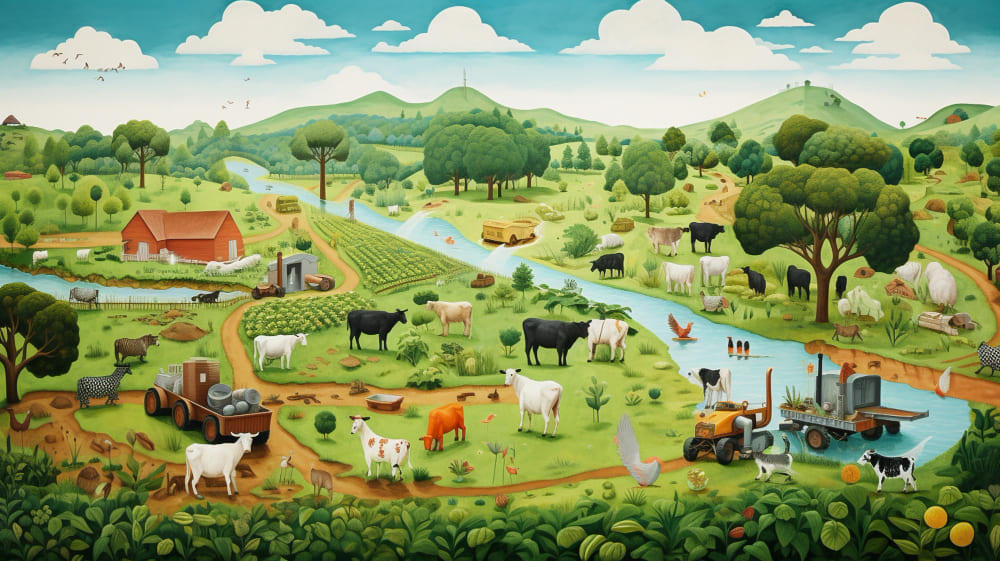
Regenerative agriculture is a farming method that puts the health of the whole ecosystem first. People who practice regenerative agriculture take care of soil health, grow different plants and animals, and help water cycles work better. The main goal is to make a system that runs by itself and gives good things back to the land through ecosystem services.
When you follow these sustainable practices, you can build a farm that works well with nature. Let's see what regenerative agriculture is, what values are behind it, and how it uses important parts of nature.
Defining Regenerative Agriculture and Its Key Differences from Conventional Farming
Regenerative agriculture is a way of farming that cares for the whole system. It helps the soil stay healthy and supports all living things around the farm. This is not like conventional farming. Regenerative farming does not use many chemical inputs or too much tillage. With regenerative farming practices, people work with nature, not against it. This builds up organic matter in the soil. It also helps there be more plants and animals on and near the farm.
The big difference between regenerative agriculture and conventional farming is how they think about the future. In conventional farming, people try to get high crop yields right away. But this can make soil health get worse as time goes by. Regenerative agriculture does things in a way that keeps the soil healthy. This helps farms stay strong and keep working for many years. In this kind of farming, people often stop or use less synthetic fertilizers and pesticides to help the land.
In project design, people try to follow the way nature works. They do not work against it. They look at how nature does things and use that plan for making better places that last. By doing this, people get good food, lower the environmental impact, and keep farming strong so it can do well even when things get tough.
Guiding Values for Building Regenerative Systems
The main idea of regenerative agriculture is to take care of the land so it stays healthy for a long time. With this way of farming, people can make good choices about what crops to grow and how to use the land. The key goal is to make the land better for future generations. This gives them a safer and a better place to live.
At the core of these values is working together with nature. This means that we put soil health first. It is important to help plants and animals live together. We also try to use water in the best way. These regenerative practices aim to cut down on waste and make good use of resources by using them again.
When you choose these values, you help make the food system stronger. It is not only about stopping harm. It is also about making the environment better. This way of thinking helps farmers feel sure of their work. It helps our communities stay healthy. It will also help us have a sustainable food supply for many years to come.
Integrating Soil Health, Biodiversity, and Water Management
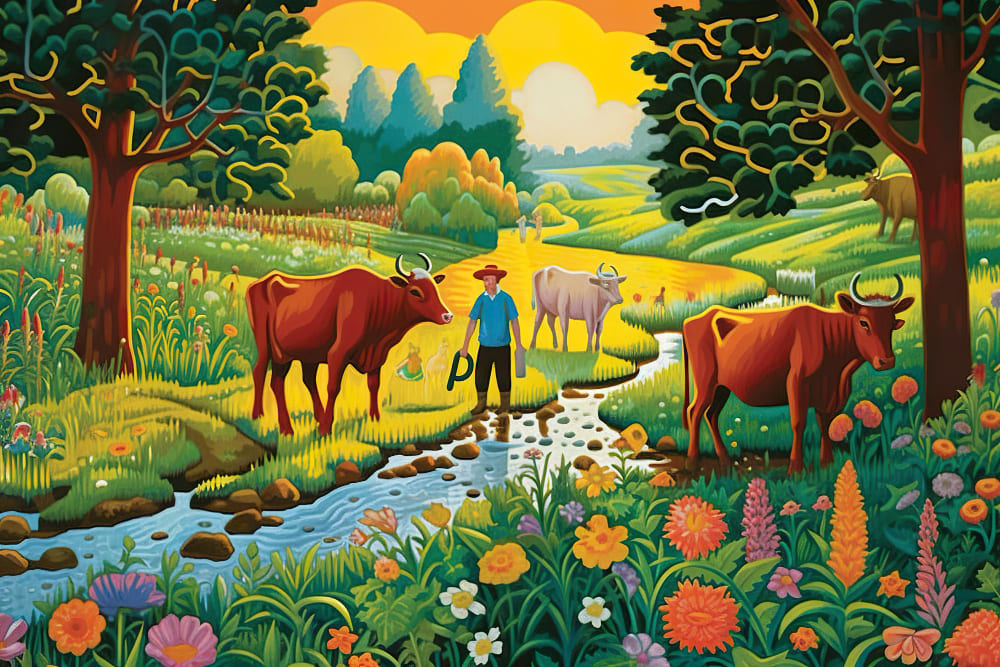
Good regenerative design brings soil health, more kinds of life, and water management together. These are all linked. They help a farm do well. Soil health is very important on any piece of land. It works best when there is a lot of organic matter and it is full of soil microbes. A healthy soil like this is the main thing a farm needs.
Better soil structure lets water go into the ground easily and keeps it there for a longer time. This helps your farm stay strong even when there is not much rain. When you plant different crops and give homes to beneficial insects and animals, you help with natural pest control and pollination. A holistic approach like this means you do not need to use a lot of outside products on your land.
Key integration strategies include:
-
Using cover crops is good to protect the soil. They stop erosion. They also help feed the life in the soil.
-
No-till or reduced-till farming keeps the soil structure in good shape. It helps the small life forms in the soil, too.
-
Planting buffer zones with native plants helps wildlife. It also makes water quality better.
Essential Design Elements for Regenerative Farms
Creating good regenerative farms means using different parts that all work together, much like how things happen in nature. The goal is not only to plant crops. It is about having a full system that can support itself. People often use ideas from permaculture and agroecology when they plan and take care of the farm.
The goal is to make the soil healthy. You want to bring in more types of plants and animals. It is good to use every resource well. If you plan your farm the right way, you can get the most out of it. Your farm will also be strong when things change. This will help the land give back useful ecosystem services. Now, let's talk about how to look at your land, how permaculture can help, and which plants and animals are best for your land. These things will help your soil health and bring more good things to your land.
Landscape Assessment and Planning
Landscape design is an important first step when you start with regenerative agriculture. You need to look at your land closely. This means you have to check the shape of your land, the type of soil, how water moves, and what plants are growing now. With this, you can make a plan that works with your land. You will use the land's shape and features to help you. By doing this, you work with your land and not against it.
When you watch how water moves on your land, you can find better ways to collect and save it. This will help the soil keep more moisture and make the water quality better. It is good to know about your soil structure because then you can choose the best ways to help it. A good practice is to plant native grasses with deep roots. These native grasses break hard soil and let water go in more easily.
When you take time to look at the land closely, you can make a better plan. This helps you pick the right spots for each thing, based on what the land can do. With this, you make sure you use every part of your farm in the best way.
Assessment Area Key Factors to Observe Soil Structure, organic matter content, pH levels, microbial activity Water Runoff patterns, infiltration rates, existing water sources, potential for rainwater harvesting Topography Slopes, contours, low-lying areas, sun exposure Vegetation Existing plant species (including native grasses), tree cover, problem weeds
Incorporating Permaculture Practices and Agroecology
Permaculture and agroecology help us think about how we grow things. They help us look after the earth. Permaculture is a way to plan our homes and gardens. It asks us to watch nature and use natural patterns. This helps people and the land stay in balance. Agroecology is about farming in a smart way. It looks at nature and tries to bring its ideas to farms. The goal is to work with the earth, not go against it.
When you use these ideas, you set up your farm to work as one system. For example, put things that need your help often, like a kitchen garden, near your house. You can put places like orchards or wood areas farther from your home. This way, with this kind of plan, you can save both time and energy.
You can use these ideas to help with pest management. They are also good for making the soil better. These ways use things found in nature, so they are safe and work well.
-
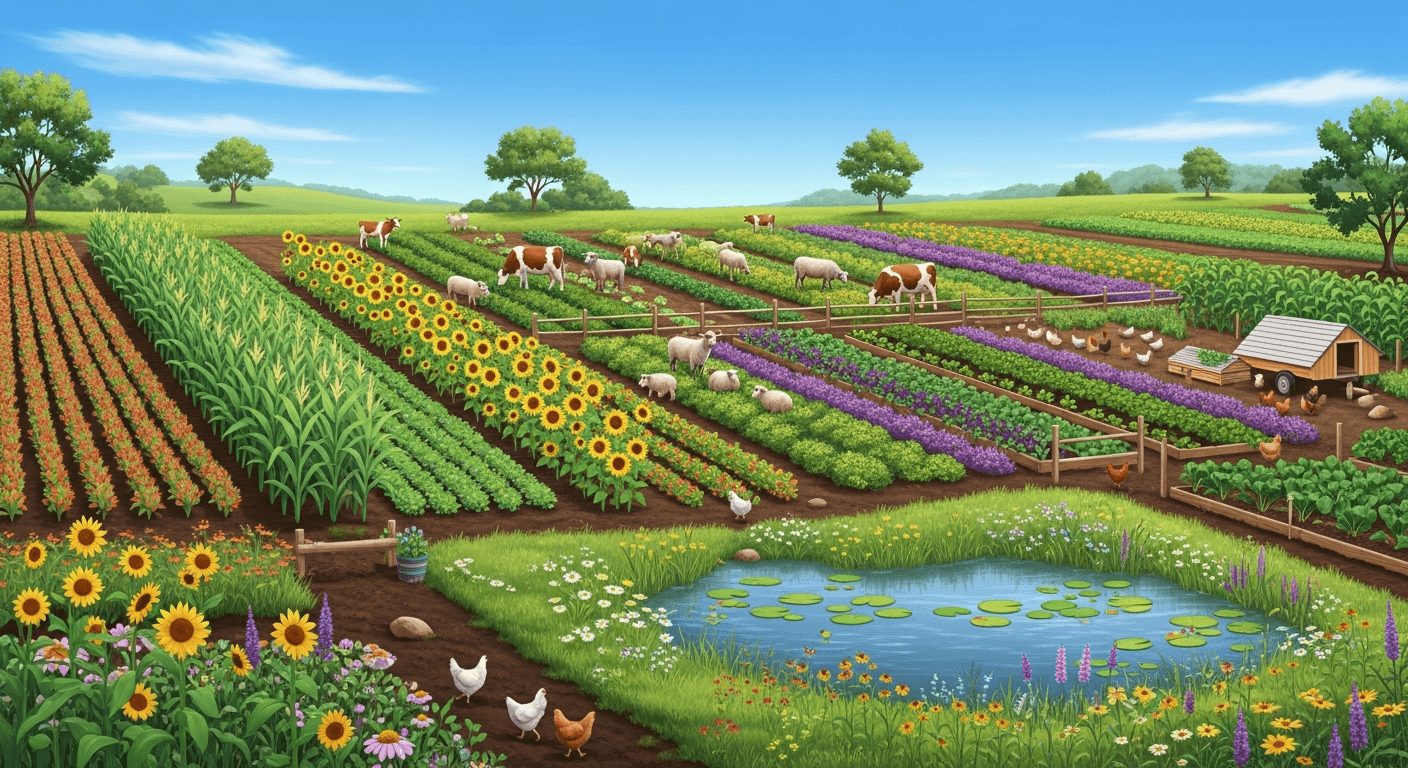
Stacking Functions: Choose plants and animals that can do several jobs. A chicken, for example, will give you eggs. It also gives you meat and manure, which you can use to help your soil. The chicken can eat bugs, too, and keep them away from your farm.
-
Using Edges: The spot where two areas meet, like a field and a forest, is often the best place for life to grow. There are usually more types of plants and animals here. Try to set up your farm to use these edge spots as much as you can.
-
Integrating Elements: Put things on your farm in a way that helps them work together. For example, if you dig a pond at the high part of your land, it can hold water. That water can then flow down and help water the garden below.
Choosing Crops, Livestock, and Companion Plantings
Choosing the right mix of crops, animals, and other plants is an important step when you start a good regenerative farm. It is very important to have plant diversity. Do not try to grow only one crop. Instead, use crop rotation and intercropping. This way, you can make soil health better, keep pest problems down, and grow bigger harvests. Cover crops also help a lot. They protect the soil when the main crops are not growing.
If you can, adding animals to your land will help the soil get better much faster. Rotational grazing is a good way to do this. In rotational grazing, you move the animals from one spot to another often. This is like what the wild animals do in nature. When the animals leave their manure on the ground, the soil will get important nutrients. When the animals eat the plants, it lets new ones grow back strong.
Companion planting is a good way to do gardening. In this method, you plant certain plants next to each other so they can help the other grow. For example, some plants keep pests away. Some also bring in beneficial insects. These helpful bugs can make pollination better or keep pests under control. This makes your garden stronger and helps it work well on its own.
Practical Steps to Start Designing Your Regenerative Agriculture System
Are you ready to begin making your own regenerative agriculture system? Making this change can feel hard at first. But it will get easier if you take it step by step. These steps can work for all types of farms, including small farms. Start by looking closely at your land and what is there. Once you know that, you can set clear goals that you will work toward.
The journey is about changing the way you think of farming. You will move away from conventional farming and start to use a more holistic approach. The next parts will help you get started. You will look at your site first. You will also learn how to make goals for this big change. At the end, you will see how to build a simple plan you can follow.
Site Evaluation and Resource Inventory
To start building a regenerative system for your small farm, first take some time to look at your land. Make a list of all the resources you have right now. This will help you know what you are working with. Walk on your land and see what you notice. Look at where the water moves. See which areas get the most sun.
Look at all the resources you have. This includes your soil, water, buildings, tools, and also what you know and can do. It is very important to check the soil health. You can do this by looking at the soil, or you can send soil samples to a lab. This helps you find out more about the organic matter and soil microbial activity.
Making a list of what you have can help you spot new chances. It also lets you see what you cannot do.
-
Soil: You have to test the soil. This helps you find out the nutrient levels, pH, and how much organic matter is in it.
-
Water: Map the ponds, streams, and wells. Mark the places with good water retention and those where water does not stay.
-
Infrastructure: List the fences, barns, and roads you have now. This first checkup of your land will be the base for your regenerative design plan.
Setting Goals and Mapping the Transition Process
After you look at your site, the next step is to set your goals. What do you want the regenerative system to give you? Some want lower input costs. Others focus on better soil health. You might wish to bring more life to your land. You may want to grow more food that is good for you, too. When your goals are clear and can be measured, it helps you know what steps to take next.
Switching to new ways does not happen fast. The process takes time. You need to change things bit by bit. There is no need to do everything at once. It helps to make a plan about what to do and when. This way, you go from your usual ways to new and better ways.
For example, in the first year, you can begin by using cover crops in one field. In the next year, you might try rotational grazing. Then, in your third year, you can do less tillage.
This step-by-step way helps you learn and make changes as you move forward. It can help you lower risk. A clear plan will let you use your time and resources in a good way. This will make switching to sustainable food systems feel easier. Your plan should aim to lower your environmental impact. Over time, your land can also help sequester carbon.
Creating Actionable Plans for Implementation
Now that you know your goals and the steps to take, it's time to make a clear plan. A plan helps you break big goals into smaller tasks you can do. A good plan will show what you need to do, when to do it, and what you will need for each task.
For your regenerative farming plan, you can try planting cover crops at different times. It also helps to set up a paddock system for rotational grazing. A good plan should be flexible. You have to check how things go and be ready to change your way. This helps you know what works best for your land and weather.
Your implementation plan could include steps like:
-
Year 1: Start with soil tests. Then, plant a cover crop mix. Use several types of plants on 25% of the land.
-
Year 2: Buy some portable fencing. Use it to set up rotational grazing with sheep. Start with a small group.
-
Year 3: Try planting your main cash crop without tilling the soil. Do this on one part of the farm. When you add regenerative practices one step at a time, it does not feel hard.
Overcoming Challenges in Regenerative System Design
There are many good things about regenerative agriculture. But it can be hard to get these systems working and keep them going. A farmer can face money problems, not knowing how to do it, and trouble with planning. Climate change makes it even harder. There are more extreme weather events now. This means they have a lot more to think about when they work in the field.
But these problems are not too much to handle. With some planning and being ready to learn, you can get through them with help from others. The next parts will look at some common problems. They will talk about ways to deal with them. You will also see how you can make a strong group of people to help you.
Addressing Climate, Financial, and Logistical Hurdles
One big challenge in regenerative design is dealing with money issues. You might need a lot of money at the start to buy new things like equipment, seeds, or animals. It can take a few years before you get your money back, as the soil and land take time to improve.
Climate change is a big problem. It can bring extreme weather conditions like long droughts or heavy flooding. These weather changes test how strong any farming method is. Regenerative agriculture tries to be better and stronger as time goes on. But starting it is not easy. There can be hard times in the beginning. A lack of good market access for regenerative agriculture can also make things harder.
To get through these things, you can try doing the steps below:
-
Financial: Try to find grants or loans with low rates made for projects in sustainable agriculture. It is good to start with a small setup, so your early costs stay low.
-
Climate: Set up your farm to control water better. You can do this by planting cover crops and making swales. These steps are good for both dry weather and times with a lot of rain.
-
Logistical: Sell your food to local food co-ops or straight to buyers. This helps you make your own market for your crops.
Managing Change and Encouraging Community Support
Moving to regenerative agriculture is a big change. It's not just about what you do on your land. It is also about how you see farming. Some people, or even you, may not want to change at first. This switch takes time, hard work, and good talks between people. You should remember why you are doing this. You want to do more than change the way you farm. You are also opening up to a new way to think about the work you do.
Getting the local community involved can help solve problems in a big way. You should talk about your journey with neighbors, community members, and other farmers. Let more people visit your farm for tours or workshops. Show them what you do and tell them why it matters for environmental sustainability and food security in your area. When people see the good results, they will feel ready to help and support you more.
When you build a group of people who think the same way you do, you get a strong support system. If you join groups led by farmers or talk in online forums, you can share your story. You can ask questions and also learn from people who do the same work as you. Being in this group will give you the push to keep going, especially when things get hard.
Conclusion
In the end, building good regenerative agriculture systems is about more than just using certain methods. It is about keeping a mindset that sees how soil health, life, and water care are all linked. If you know the main ideas and some easy steps to set up these systems, you can move toward better and lasting farming.
There may be some hard spots on the way. But with strong will and help from others, you can get past them. Start now and step on this path to regeneration. Take your first step today. If you want some help to begin, you can ask for a free talk and learn how we can help you make your regenerative agriculture plan.
Frequently Asked Questions
How do I begin designing regenerative agriculture for a small farm?
To start planning for a small farm, you need to look closely at the land you have. Check the soil health first and think about your goals for the farm. When you know these things, you can bring in regenerative farming. Start with easy farming practices like using cover crops. After you feel good about these steps, try other regenerative farming practices that may be more advanced.
What is the role of permaculture in regenerative agriculture design?
Permaculture is an easy way to plan for regenerative agriculture. It works by using natural patterns found in the world. With permaculture, all parts of the farm get to work together like one big system. This approach makes the farm strong and able to support itself. It helps bring more life to the area and also improves soil structure. When we copy how healthy natural places work, the farm will do well for many years.
How long does the transition to a regenerative system typically take?
The move to a regenerative system is not the same for everyone. You might notice some small changes in soil health in one to three years. A full and strong system that helps give good ecosystem services can take five to ten years or even more. This will depend on where you begin and what you do as you move forward.